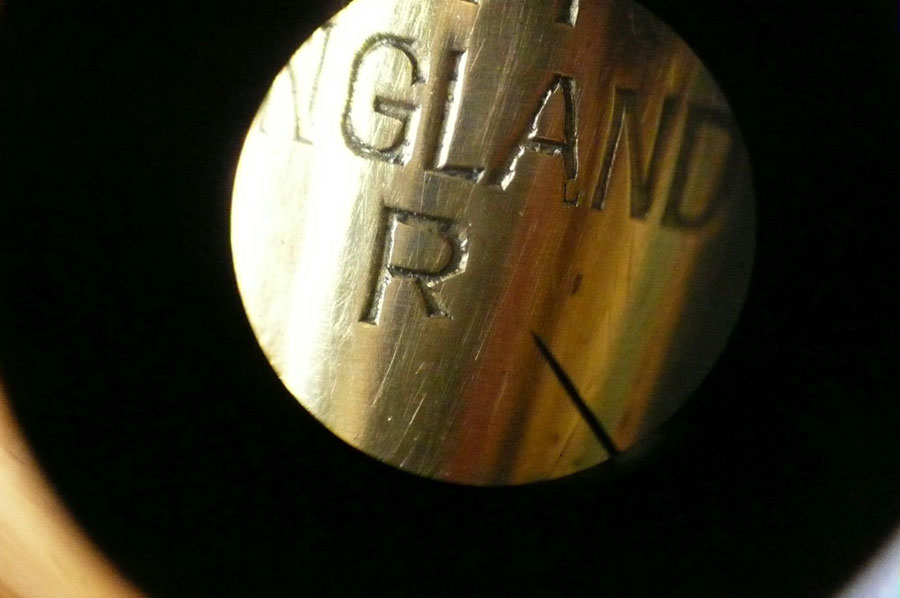
Sheaffer Triumph Lifetime Statesman


You may remember that a few weeks ago I wrote about a Sheaffer Triumph Sovereign that I really liked but was unsuitable for me as I prefer a fine and it was a medium. A very kind and generous correspondent made me a present of a very similar Sheaffer with a fine nib.
IMGP2207
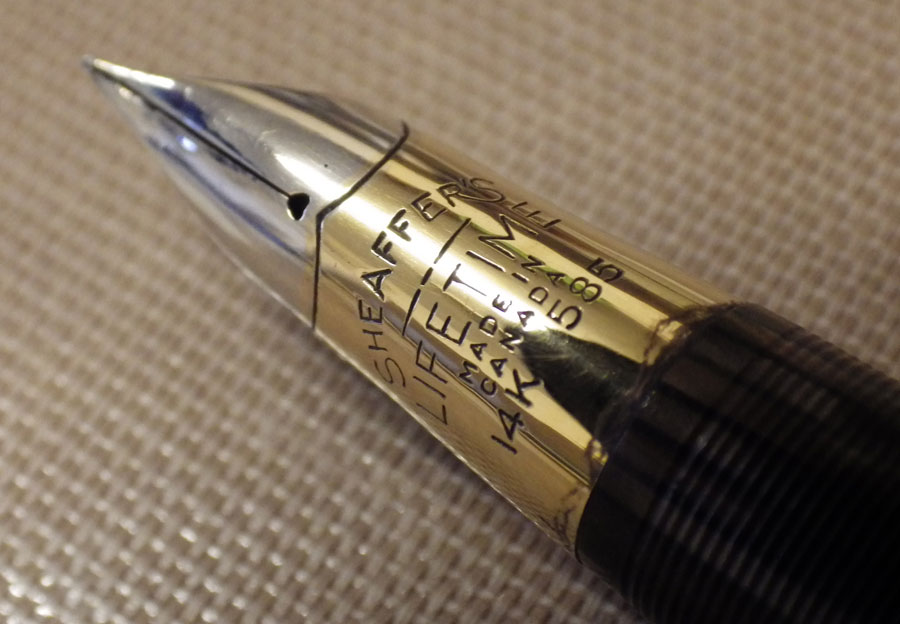
This, I believe, is a Sheaffer Triumph Lifetime Statesman. If you know better, please inform me. I’m no expert on Sheaffers and there are very many of them. Anyway, this one dates to about 1945, I understand, and it was made in Canada.
IMGP2208
It’s very like the other one, being brown/gold striated with a Lifetime Triumph conical nib. What a splendid concept the Triumph nib is! Several other manufacturers have come up with conical nibs but none of them are a patch on the original.
IMGP2211
This pen is a superb writer and it will always be on my desk. It’s one pen that won’t appear on the sales site. Ever.

A Curiosity!

IMGP2197

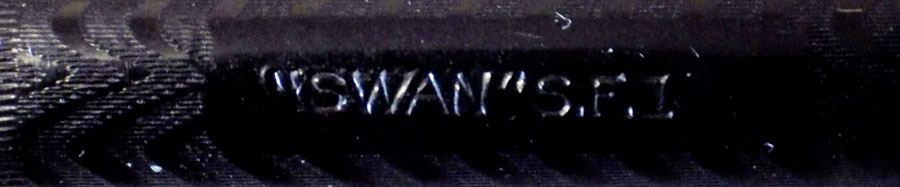
At first glance it’s a Swan SF1 in unusually good condition. Picking it up, it seems a little too heavy – and that’s because it’s solid, machined to the appearance of an SF1 only externally.
IMGP2198
This would have been a salesman’s example or, more likely, part of a shop display. I suppose it saved the labour of making an actual pen and, of course, the cost of the nib. It’s just a pity that the actual pens turn up in such good condition so very, very seldom!
IMGP2204

IMGP2202
These things appear from time to time but they’re by no means common. Most, I suppose, were thrown away long ago when the model ceased to be current.

Mentmore

IMGP2188

IMGP2189

Usually the company made a clear distinction between Mentmores and Platignums but this pen is the exception. Everything about it, the pattern and the feel of the material, the glittery chrome-plated trim and the tiny nib all say Platignum, but it’s a Mentmore. It has neither model name nor number.
IMGP2194
It’s a button filler, 13 cm long. The nib is warranted and so may not be original though I suspect that it is because it fits so well. The nib has considerable flex.
IMGP2191
This pattern and style among Platignums dates to the late thirties and doubtless it’s the same when it has a “Mentmore” stamp on the barrel. The material of barrel and cap is quite thick, making for a very robust pen.

Union No 68


Smartieedit

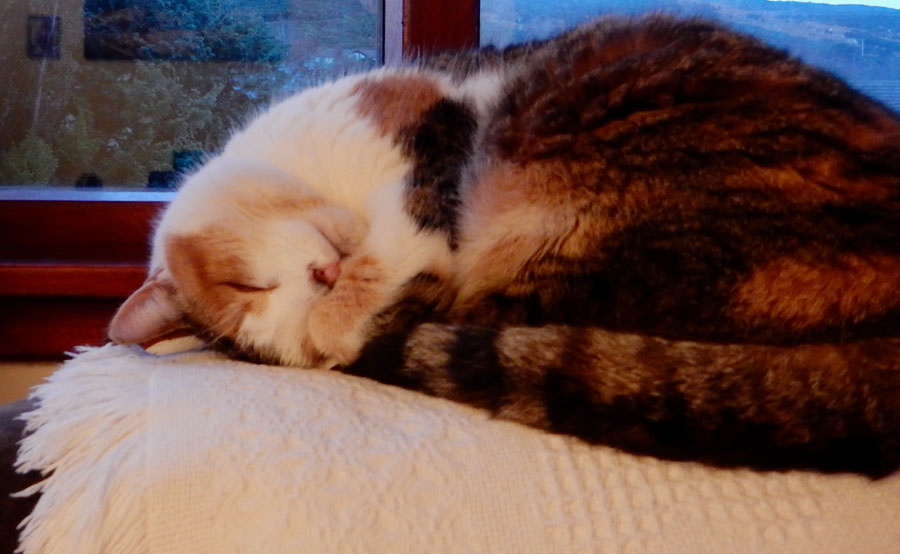
The good news is that my assistant seems to be responding well to her insulin injections and change of diet. Here she is after being introduced to a catnip-laced toy. She’s saying, “Man, that’s good weed!” Anyway, to business:
IMGP2180

IMGP2181
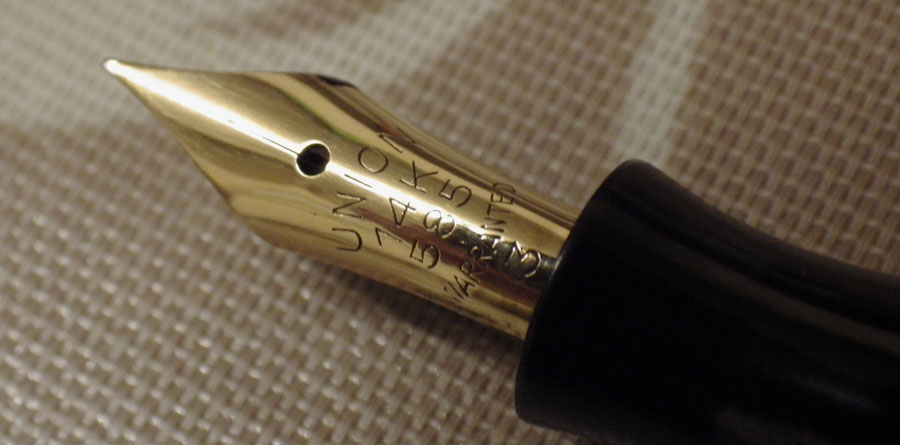
I’m aware of three brands of fountain pen called “Union”. There is a British one made by Langs, an American pen that is a sub-brand of Morrisons and a Dutch company that made pens after World War II. This, I believe, is the latter, purely on the grounds that it is very European in appearance and I’m not aware of any American or British companies that used this “fixed converter” type of filler.
IMGP2185
It appears to have been made out of a fairly soft kind of plastic because both barrel and cap have shallow scuffs and scratches. The viewing window is discoloured, probably from the use of red ink. All of this is redeemed by the nib which is quite splendid – a fine with a little line variation.
IMGP2183
These pens are not very common – in Britain at least – but they would hardly qualify as rare. Much of their interest arises from the fact that they were one of the few pens that were made entirely in Holland rather than from imported parts. Just one of the many well-made European pens that are well worthy of note.

Pilot Custom Heritage 91

IMGP2166

IMGP2168

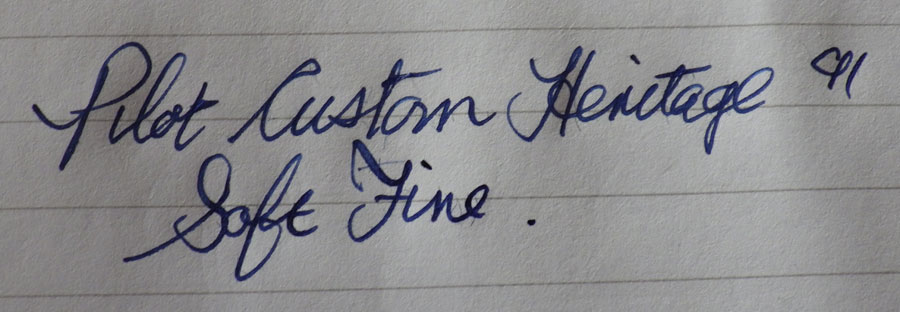
There was much talk in the boards some time back about this Pilot Custom Heritage 91 and I ordered one some weeks ago. I think I paid around £50 for it but I believe you can get it cheaper in eBay these days. Mine came direct from Japan, boxed in the usual way for pens nowadays and with one cartridge and no converter which I thought was a tad stingy of them. That’s really the only criticism of this pen that I will have. I’m really pleased with it. I hear tell that it’s not on sale in the USA – I don’t know why.

IMGP2176
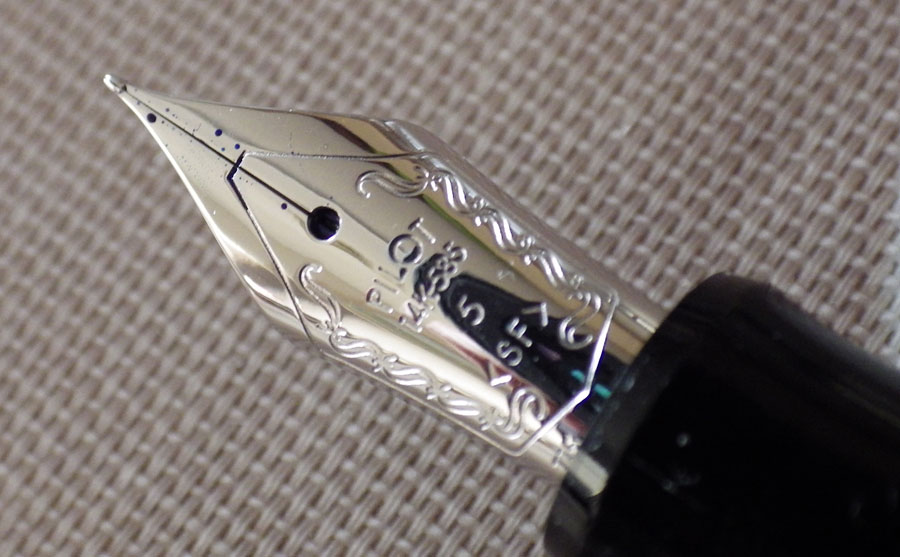
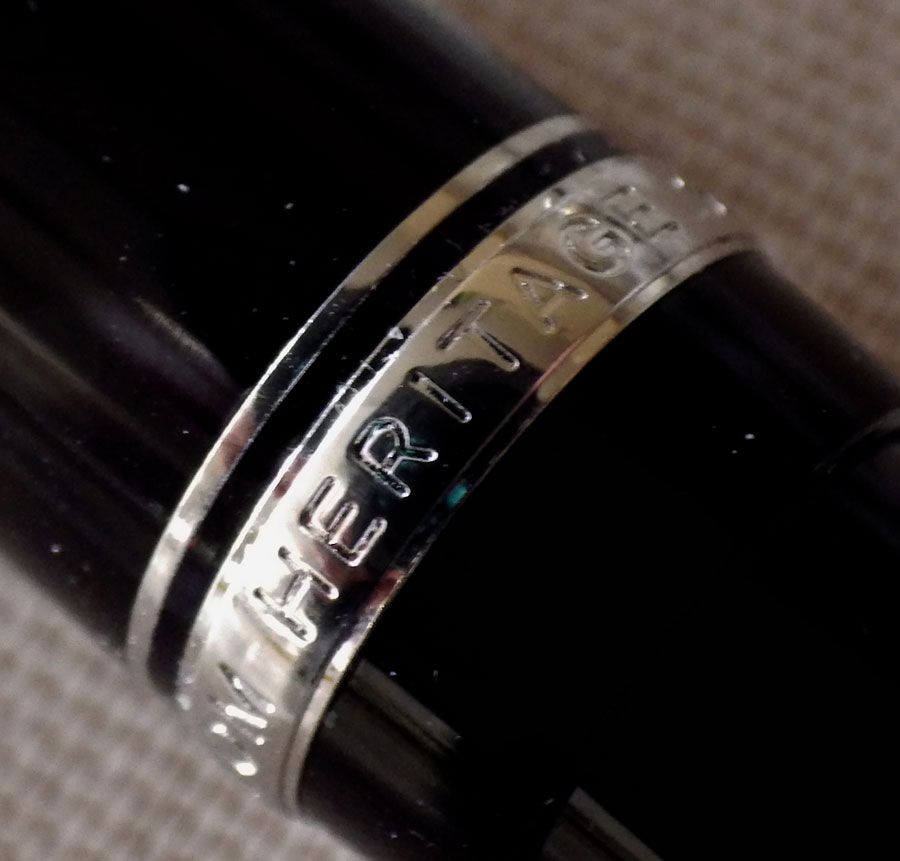
At 13.7 cm it’s a medium sized pen by today’s standards. Cap and barrel are made of black resin (what we used to call plastic in days gone by) which makes for quite a light pen at 17 g. The trim is nice, shiny rhodium. When you unscrew the cap, there is the nice, shiny rhodium plated nib. Why take a gold nib and plate it with something that looks quite like stainless steel? That doesn’t apply to this pen alone, of course. It’s the fashion of the day.  The clip is quite Pelikan-like.
IMGP2170
Some reviewers have referred to this pen as semiflexible. It isn’t. It’s just a soft nib. With pressure one can wring some line variation out of it but I just enjoy the springiness which makes writing comfortable. I have seen the number five nib described as “small” but that’s just in comparison with today’s huge, spade-like nibs. It’s about the size of a Swan number three. It writes beautifully; adequately wet, no skipping or scratching, just some slight but positive feedback.
IMGP2177
The pen is aesthetically understated and it’s hard to wax lyrical about such a subdued pen, yet it’s probably the best modern pen that I’ve tried. In fact, its only possible equal is the Capless by the same company. I’ll be keeping this one.


IMGP2174

Conway Stewart 570

IMGP2155

IMGP2157

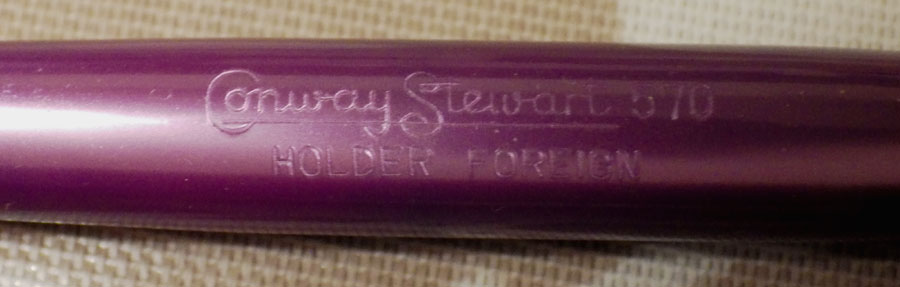
This is the Conway Stewart 570, a late version of the ever-popular Dinkie. It measures 11.4 cm capped. It hasn’t quite the quality of earlier Dinkies and, indeed, the barrel bears the legend “holder foreign”. I have a vague memory that these pens were made, for the most part, in Germany. The Conway Stewart nib was added and the pen assembled in Britain.
IMGP2160
These pens are popularly called “Lumina” because of their luminescent colour and they are very beautiful. The clip is in a most un-Conway Stewart-like arrow form. The section is short and hints at a modern semi-hooded nib, though it doesn’t go quite that far. The nib is small, with quite a lot of tipping material. This example is in excellent condition and may never have been used.
IMGP2159
The pen is contained in a very shabby box and on the underside is written “Vanessa Hodge”. I found plenty of Vanessa Hodges in a Google search, including a biodynamic craniosacral therapist, an investment consultant and a soccer player among many others but they all appear too young to have been the owner of a pen made between 1964 and 1972.
IMGP2162
I think that if the 570s had been plain self-coloured like many of the other pens Conway Stewart made at that time they would attract very little interest now but the splendid luminescent colouring, which you see on some Continental pens, is their saving and they are quite popular today.

Smartie

smartie

Sad news today. My assistant is not well and is at the vet’s having tests done but it seems likely that the problem is diabetes. Thankfully, much can be done these days but her life will never be the same.

We’ve spent the day researching. One thing that stands out a mile is that there has been a huge increase in cat diabetes in line with the huge increase in the popularity of dry foods. It seems that most of these foods contain a lot of plant material, particularly cereals. Considering that cats are exclusively carnivorous that would seem to be the reason for the diabetes. I checked the packaging of the Science Plan that Smartie lives on and there it is: rice, maize and vegetable oil. No percentage is mentioned but doubtless it’s in large quantity to fill the bag cheaply.

It’s the old story. The providers of these cat foods have loyalty only to their shareholders, not to the cats. I feel a thunderous anger rising. Someone may have their gizzard forcibly removed before I’m done.

This is the second cat of mine that has developed diabetes. When it happened to the first one, injections of insulin were not given for small animals; the only treatment was a dietary one and my poor Lily would not touch the food provided. The outcome, as you may imagine, was a tragic one. She too, was fed Science Plan. It didn’t occur to me then to associate the food with the illness.

I would say if you are feeding dry food to your cat, stop it NOW! Find a food that is composed entirely of meat, or is at least low carbohydrate, high-protein.

Late Swan Lever Filler

IMGP2142

I’ve been puzzling over the date of this pen today. I believe that it’s not the first metal-capped pen that Mabie Todd issued under the Swan name. There was one of 1948 to 1952 that had the clip inserted through the cap. That seems to me to be an earlier design than this one. My guess is that it’s somewhere in the period 1954 to 1958. It’s a better pen than the Warwicks and Oxfords that were made right at the end. This pen is capable of repair which is more than can be said for those others.

IMGP2144
I have a great many Mabie Todd adverts but unfortunately none of them is later than the nineteen forties. My various reference books are helpful to a degree but they don’t go quite far enough back either. Best guess is all I can do.

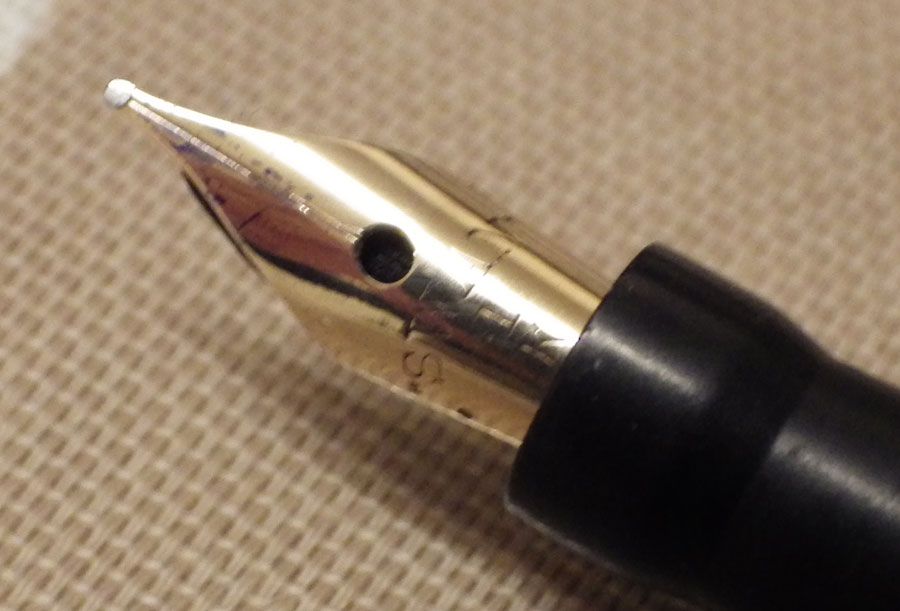
It’s a handsome pen, perhaps a little on the smaller side at 12.8 cm capped. The cap is gold plated and nicely patterned. The clip is held in place by what appears to have been a screw which has been later buffed down. The black plastic barrel takes a moderate shine. The cap is screw-on and still fits quite well. Even at this late date, the section is made from black hard rubber. The nib is a number one and by comparison it is smaller than the traditional number ones. The section screws in. I did a quick writing sample and I wasn’t too pleased with the result.  The nib will need some work before I pass the pen on.  It’s quite flexible but doesn’t lay a line reliably unflexed.
IMGP2146
The metal cap really took off in the late forties and fifties, perhaps because of the popularity of the Parker 51. This is a nice example with its subtle pattern. It’s an excellent pen by any standards and writes very well but in handling and using it there is a suspicion in the back of the mind that this isn’t quite up to the mark that Mabie Todd had established for the Swan pen. If it were in the output of almost any other manufacturer one would say it was a very good pen indeed. As a Swan, however, it’s not as good as earlier pens and, sad to say, there was very much worse to come.
IMGP2147
This, to my mind, is a pen made by a company marking time while they decide how to go forward. Some pen makers, like Montblanc for instance, went upmarket which was a good decision as they are still around today, producing far fewer pens for a vastly higher selling price. Others, like Conway Stewart, tried to continue by reducing the unit cost and hence the quality. They bit the dust fairly rapidly. Still others, like the Mentmore company, aimed for a specific sector of the market which gave them a few more profitable years.

In the end, of course, production of Mabie Todd pens ceased in 1958. The decision to do so was made by the Bic company who probably did not have any great commitment to the long and admirable history of the Swan fountain pen. They had a good product – probably the best of its kind – in their ballpoint pen. That was where profitability lay and it would be foolish to expect a company with responsibility to their shareholders to do anything other than pursue their most profitable line. It is sad, though, that such a splendid writing instrument as the Swan pen ceased to be made.
IMGP2150
A few years ago, someone turned out a series of cheap Chinese pens and called them Swans. It was a disgrace to traduce such an eminent name in this way. Thankfully, nobody liked the pens and they appear to be no longer to be sold. Trying for commercial success on the back of an earlier company’s fine name is very poor practice. Personally, I would rather have the cheapest Conway Stewart Scribe than even the most expensive so-called “Conway Stewart” that was made by a company with no connection to the original output which tried to claim continuity with the old company. I suppose it’s too much to expect ethics in business these days.


A Little About Little Me

Debbday

Ten years ago I lived a few miles outside Philadelphia and worked as a legal admin. My hobby was old fountain pens, especially British fountain pens. Not in my wildest dreams would I have imagined that one day I would live in Scotland and earn my living restoring and selling them.

My husband-to-be lived in the remote north of Scotland and was then a registrar of births, deaths and marriages. His hobby, too, was old fountain pens. We “met” on a site that was about creative writing and it had nothing to do with fountain pens. That was a kind of freaky coincidence.

One thing led to another and we were married in Pennsylvania seven years ago and here we are now 2698 restored pens later (as of today).  So much of what I have learned in detail about British fountain pens has come from shamelessly mining my husband’s brain, and much of our fountain pen business has been a happy collaboration.  On days when I’m feeling lazy and not much like researching a question someone has, all I often need to do is holler out from the den, “Sweetheart, what can you tell me about a Conway Stewart 55?” and faster than a speeding Windows 10 download, I have my answer along with side-notes, personal stories of Pens He Has Known, and generally even which reference book I should be looking in.

So if someone had said “You’ll be living the Pen Life with someone who is as geeky about them as you are,” I would have laughed.  But oh how glad I am that life’s funny turns have led me here.