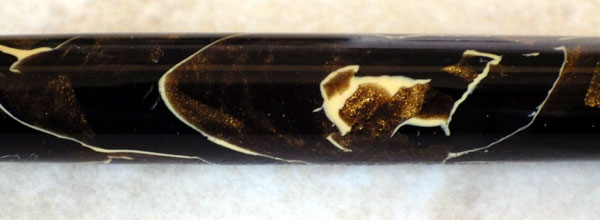
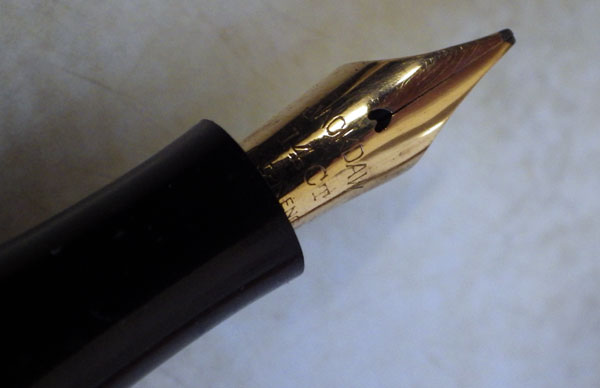
A 1935 Mabie Todd Jackdaw

IMGP6287

In the hierarchy of Mabie Todd pens the Jackdaw was the lowest in Britain, occupying the same place as the Swallow in America.  These were school pens and were made to a lower level of quality than the Blackbirds and Swans.  It’s rare, for instance, to find a Jackdaw that doesn’t have noticeably worn plating.  The nibs, though equally as good to write with as those fitted to the more expensive pens, were shorter in the tail and a little thinner.
IMGP6295
For some Jackdaws that position is now reversed.  Collectors vie for ownership of the colourful Jackdaws made in the mid to late thirties which shared the bright patterns of the Visofils.  This glorious red and black Jackdaw is an example of these especially beautiful pens.  In shape it closely resembles the brightly self-coloured Blackbirds of the same period.

A collector of “bird” pens – Swans, Blackbirds, Pelikans, Eagle pens and the like – asked me once if the Jackdaw and Swallow had bird barrel imprints like the Swan and the Blackbird.  I had neither to hand at the time and couldn’t answer with any degree of certainty but here it is:

IMGP6290

IMGP6296

IMGP6298
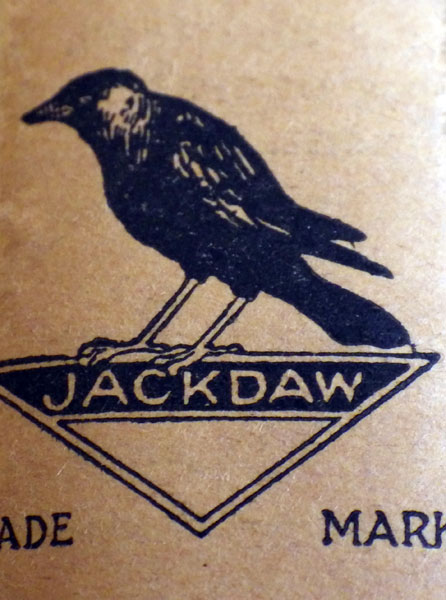
No bird imprint on the barrel but a splendid Jackdaw Trade Mark on the box and the paperwork.  I still can’t say about the Swallow, having only handled a couple and that a long time ago.

IMGP6289
School pens get a harder time than any other.  The result is that these colourful Jackdaws are not at all common, more’s the pity.  Like the Visofils, they’re not often seen now.  That makes such a fine example as this all the more to be valued.

Chinese Brass

IMGP6273

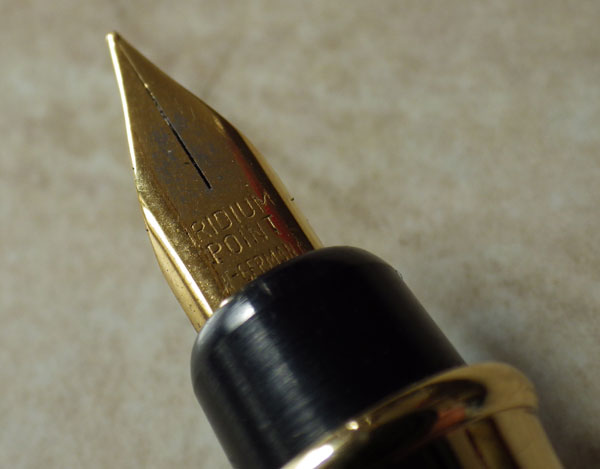
This strange-looking pen turns up frequently in eBay.  My one arrived as part of a lot and was ignored for months but I took a look at it last night.  No name – in fact no writing anywhere except on the nib, and that’s “iridium point Germany” so it’s Chinese.  Not that there was ever any doubt.
IMGP6280
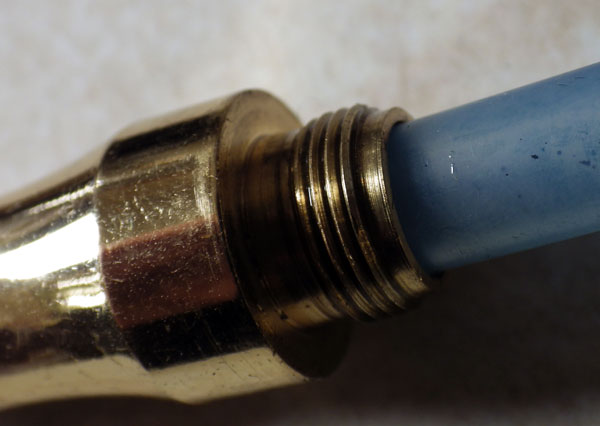
It’s a hunk of brass.  The rubber rings are there to provide a better grip and they certainly do.  What can you say about a pen like this?  First and foremost, I suppose, is that it’s ugly, and not in a minor way.  Ugly as guts.  Looking at it might turn you to stone.  Secondly, it’s heavy.  Well, duh!  It’s machined brass; of course it’s heavy!
IMGP6283
I mean, look at that.  It’s plumbing, that’s what it is.  It’s really got nothing to do with how a proper fountain pen is made.  The little flat-topped nib seems very out of place on this bloated pseudo-pen.
IMGP6276
Now that it has been suitably slagged, there are one or two things to say in its favour.  It’s in perfect condition and it works.  There was a time when I sent pens like this to the landfill but no more.  If they work I list them in the “Bargains” section of the sales site for a peppercorn price and if anyone wants such a pen, there it is.  It might suit someone who has arthritis which makes it difficult for them to use a slender pen.  I have arthritis myself though it isn’t that bad yet, and the hot wax helps – thanks to CC Barton!
IMGP6277
If anyone knows which Chinese company makes this piece of superior plumbing and what the thinking behind its extreme oddity is, I’d love to hear about it.

Lapis Lazuli Duofold Streamline

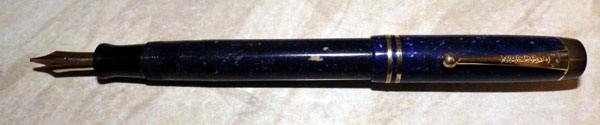
Months go by without a lapis lazuli pen, then I get two!  This second one is a real beauty, a streamline Duofold.  Forgive the flash photos; time is pressing today.
IMGP6265
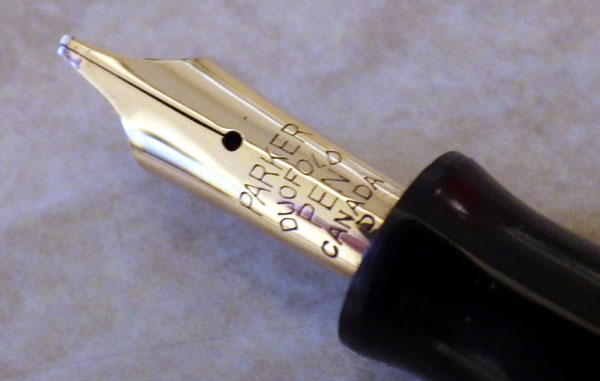
As if the glorious colour is not enough, how about this nib?  You don’t get many oblique stubs in a pound of Duofolds.
IMGP6269
What more needs to be said?  The pen says it all.
IMGP6267
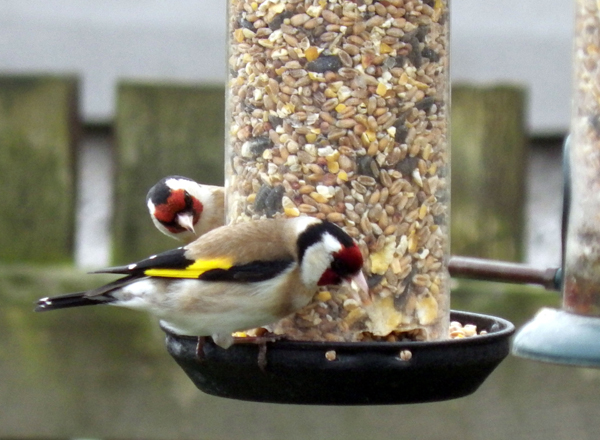
Talking of beautiful colourful things, this pair of goldfinches honoured my bird feeder today.
IMGP6247
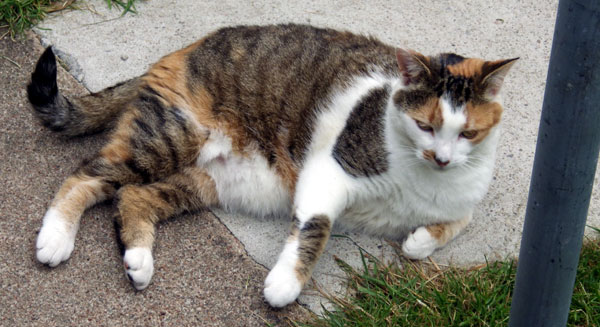
And here’s my assistant, busy as always.

IMGP3882

Stone Paper

I don’t usually write about paper for the simple reason that I don’t know much about it. I use whatever cheap paper the supermarket offers for pen testing, in the belief that if I can make a pen write well on low quality paper it should be fine on better quality stuff. For writing samples I use Basildon Bond because it’s fountain pen friendly and it has remained consistent in texture and colour over the many years I’ve used it.

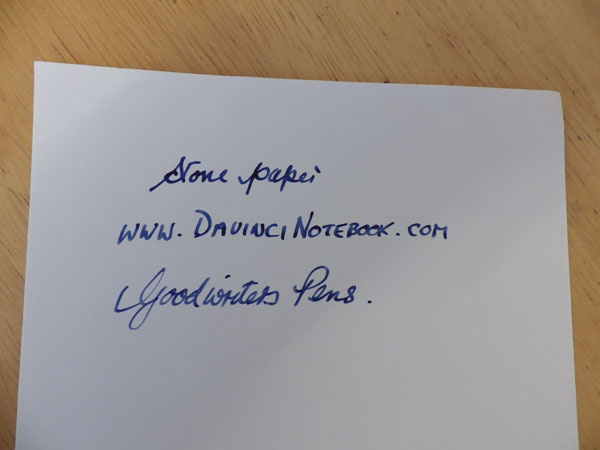
I’m writing about paper today because Nick Romer contacted me about a new paper he has developed. It’s quite revolutionary in concept and seems to tick most of the boxes I would want in good paper. You can read all about it on http://www.DavinciNotebook.com.

IMGP5995

Nick provided me with a sample. I wrote on it using a pretty wet pen with the result you see here. There’s no feathering and the paper is pleasant to write on. It’s a subtle ivory colour and very smooth. Seems to be excellent paper. I would be pleased to use it. It’s heavy – I would be interested to hear what a ream would weigh.

Scotland has a long and honourable history of paper-making and, as a consequence, has had some of the most polluted watercourses in the world. Traditional paper manufacturers have done much to mitigate the harm they cause to the environment but paper remains an ecologically demanding process. Where Nick’s paper impresses is that it is remarkably environmentally friendly. It doesn’t use wood or water or emit toxic air and is composed of calcium carbonate (80%) and non-toxic resin (20%). The calcium carbonate is marble quarry waste.

This is a Kickstarter project which means that the person in the street can support it at a cost to suit their pocket, should they choose to do so. This seems an exceptionally worthy project to me.

Unbranded Ivory And Black

IMGP5980

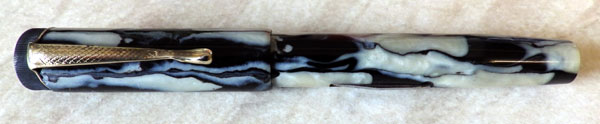
This little (11.7cm capped) pen arrived as part of a lot some time ago. At first glance the pattern suggested that it was probably an old Platignum but closer examination showed no indication of who had made it. I laid it aside to be worked on if I ever got the time. I suspected that it might be one of those foreign pens that resist every effort to repair them.

IMGP5982

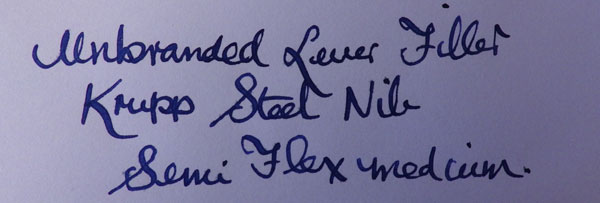
I found the time at the weekend. The section was ridged where it fits into the barrel like a late forties Waterman. This gave it a mighty grip as some mystery glue had been used. Heat and patience did the job, as ever. It had a j-bar which was in good order and it took a No 20 sac. The clip was missing but I found one to fit. The nib had once been plated but that was long gone. I examined it minutely in the hope that there would be some clue to the manufacture of the pen but there was nothing there. The nib was worn out. I could have fitted a gold nib as a replacement but it would have been like fitting a Rolls Royce hood ornament on a Ford Prefect. I bought some excellent Krupp nibs a few years ago and I still had one or two left, so that’s what went in the pen. Makes a great writer with even a touch of flex.

IMGP5993

Who made it? I literally don’t have a clue. The general shape and especially the ridged clip screw are an echo in miniature of the Duofold so it’s probably a thirties pen. It’s definitely not a Platignum as they weren’t shy about putting their name on their products. There’s nothing at all on the barrel or cap. It hasn’t been worn or polished out; there was never any imprint there to begin with. The striking ivory and black pattern has been used by many manufacturers so that doesn’t help. I still lean towards the idea that the pen is foreign, mainly because it bears no resemblance to the output of any of the British manufacturers. That’s purely speculative so it remains a mystery, but a most attractive one.

The Conway Stewart 150

IMGP5961

Like the 68 I wrote about yesterday, this 150 is a late, downmarket pen. A year or two ago these later Conway Stewarts would hardly sell at any price but I see that’s no longer the case. There are two reasons for buying these pens, (a) to complete your collection of Conway Stewarts or (b) to fix it up to write with. After all, they have good gold nibs and the filling system is usually easily repaired. Conway Stewart insisted on calling it a Pressac filler but really it doesn’t merit another name. It’s just a squeeze filler. The sac housing is just thin sheet steel with a chrome layer and it’s particularly prone to rusting. That’s OK. It’s inside the pen when in use. You don’t have to look at it. Even if it had rusted through I suspect that cobbling a replacement together wouldn’t be too taxing on the ingenuity.

IMGP5975

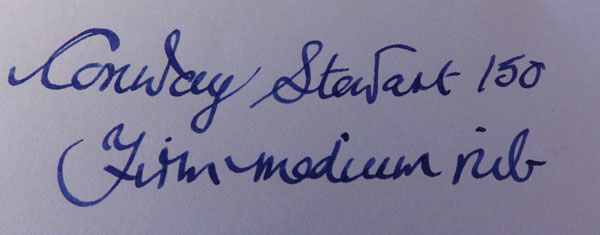
This pen is more traditional than the 68. It retains the usual Conway Stewart streamlined shape and the cap is screw-on rather than the clutch type. I popped a new sac in and it writes like a dream, quite stubbish like the 68.

IMGP5965

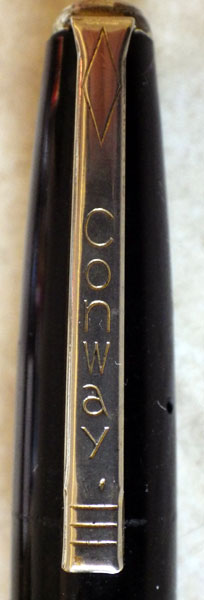
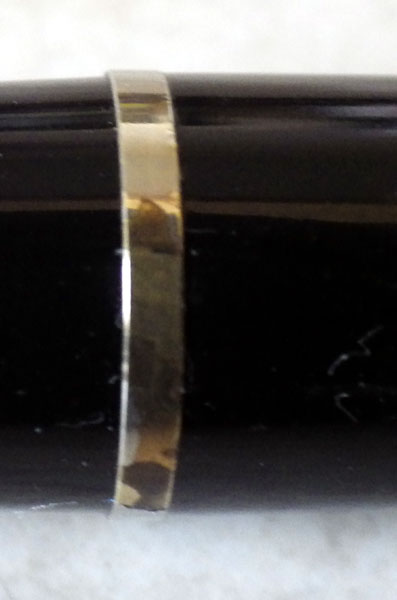
It’s a shabby pen, though. The clip once had a gold wash but of course that didn’t last long. A little reminder of it can still be seen in the impressed letters. The cap is scratched where the clip rotated against it. The plastic seems especially soft and has a waxy feel to it, like an Osmiroid 65. The cap ring has not only lost its gold wash; the layer beneath is eroding away also.

IMGP5973

Internally it’s even worse. The Pressac housing has rusted extensively. I got most of the rust off and gave it a brisk polish but it hasn’t really improved it. It works, though, which is about as much as you can ask of a pen of this age and quality. Or lack thereof. All that said, I find myself liking the pen. It’s a good and comfortable writer and it fits the hand well. It could easily be my next everyday writer – in fact I’m sure it will be. To be frank, it’s no worse than many popular low-cost pens and indeed it’s better by virtue of the gold nib.

IMGP5964

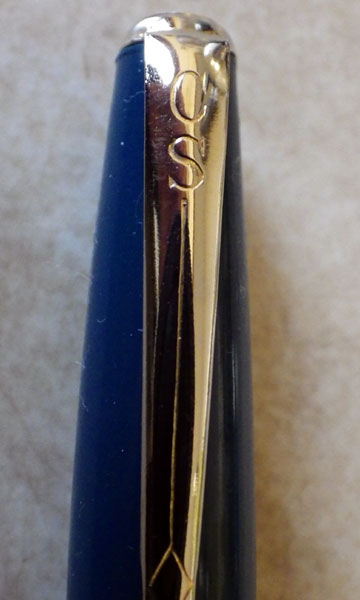
In the interests of accuracy it’s worth saying that this is the later version. The earlier ones, while no higher in quality, looked a lot better because they had something approaching the appearance of the traditional Conway Stewart clip, whereas this one has a cheap-looking steel pressing.

A Conway Stewart 68

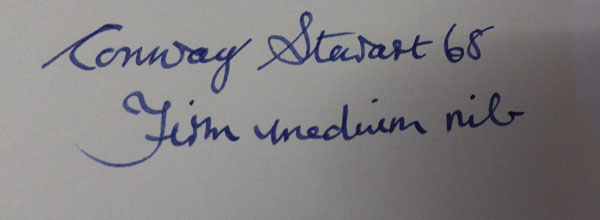
This Conway Stewart 68 differs from any of the previous ones I’ve had in one respect: it writes! The others never could be induced to write, no matter what I did. The 68 is the definition of flow problems.

IMGP5950

This one is in remarkably good condition. The gold wash still adheres to the clip and the squeeze filler inside also has pretended gold on it. I’ve never seen that before. This pen just needed a new sac (easy to install on these squeeze-fillers) and a gentle polish and it was good as new.

IMGP5956

That, of course, might not have been all that good. The late lamented Jonathan Donahaye said of the 68, “This is another copy-cat pen trying to emulate the Parker streamlined designs. In the rise and fall of Conway Stewarts, this definitely belongs to the fall.” That’s true. Though the overall impression of the pen is good, the devil is in the detail, to coin a cliché. The clip looks cheap and tinny. The squeeze-filler unit is a flimsy thing and it’s no wonder that these are often beyond recovery now. They’re very prone to rusting and as the metal is so thin it doesn’t take much to penetrate it.

IMGP5957

As against that, though, the design is visually harmonious. The placement of the clip, cap band, clutch ring and nib looks balanced and just right. The little jewels at the end of the barrel and the top of the cap set it off very well. Yes, there’s a homage to Parker in the streamlined shape and the way the tiny traditional nib and the section that looks like a hood try to be an echo of the Parker 51, though with little success. Nonetheless, I like this pen. Though elements of its style were borrowed from elsewhere, that’s not such an egregious fault. The history of fountain pens is one of stealing the best ideas of competitors.

IMGP5953

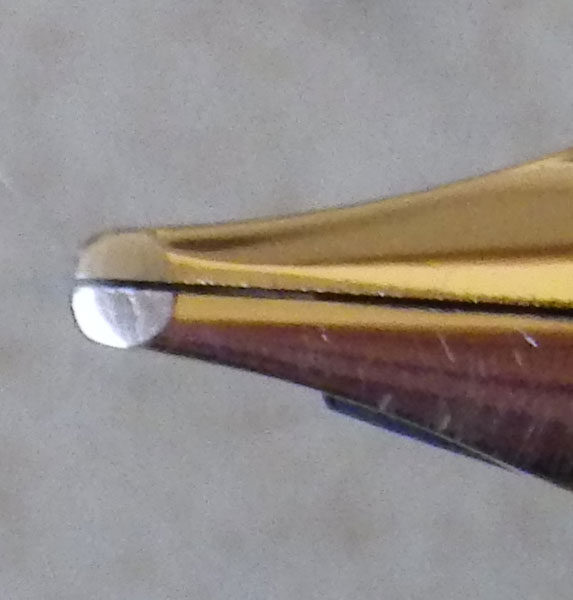
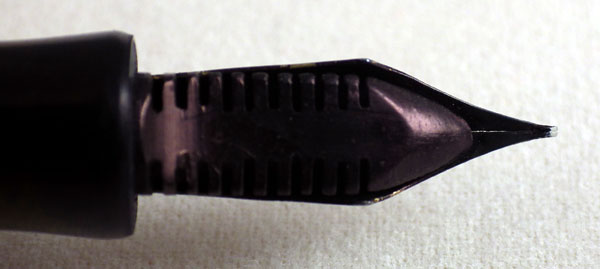
One thing I especially like about this 68 is the nib which has a rather strange-looking grind. It imparts a stubbish effect to the writing. Whatever else Conway Stewart was doing in this period, and most of it was bad, they got this right. The nib tip is a work of art.

IMGP5958

Unidentified Lapis Lazuli


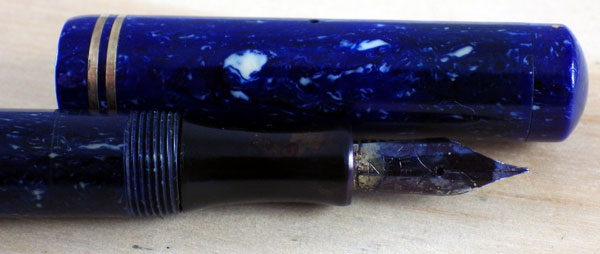
IMGP5942What about this one? It’s a beautiful lapis lazuli and I haven’t had one of them recently. It has its faults – it’s missing a clip which is easily remedied, there is a little dark staining at the top of the cap and the nib has seen better days.

IMGP5943

The pen has no name. In fact there’s nothing engraved on either cap or barrel. The plated steel nib is a Milevia Duro 4. I’ve come across these nibs before, used as replacements. The question is, is this pen to remain forever unidentified or is it a Milevia? The nib fits very closely to the feed which suggests to me that it is original. Milevia pens were made in the former Czechoslovakia and are well regarded and quite rare.

IMGP5949

It would be nice if this pen is a Milevia but wishing won’t make it so and the evidence is thin. The nib is in a quite sorry state and will have to be replaced. I’ll hang on to the old nib and if I sell the pen I’ll include it. Regardless of who manufactured the pen it’s very well made and apart from the little bit at the top of the cap where ink has permeated the celluloid and darkened it, the colour has held up especially well. It’s a nice size at 13.4cm capped and the blue is wonderfully intense.

IMGP5945

A Swan Leverless In Brown And Gold With Cream Veins

IMGP5749

Here’s the pen I was waiting for, a Swan Leverless with an Eternal No 2 nib. I have a list of Swan patterns but there are gaps in it and this one’s not there. I would call it brown and gold with cream veins. Anyway, it’s a stunner and I’ve never seen this pattern before. The only detraction, and it’s slight, is a professionally engraved name on the barrel.

IMGP5751

I almost didn’t get it. In fact I got it for what I had bid, less about a couple of quid. It isn’t so very long ago that when a pen of this quality came along it was going to reach somewhere in the £70 to £80 mark. Now, not only have prices gone up, there’s no kind of pattern to them. What sells for £90 one day sells for £160 the next. That makes it hard to know where to place your bid. You can’t arrive at a ball park figure. Ebay pen sales isn’t a ball-park any more; it’s a space without limits, populated by slightly crazy buyers. I’m not saying that this pen was overpriced – I don’t think it was – but, for instance, there was a red marbled Conway Stewart 15 in unrestored condition that went for more than seventy quid last week. That’s bordering on the lunatic. 15s usually go for around £30, and this one was just a run-of-the-mill example.

IMGP5753

Be that as it may, I spent quite a while this morning studying that pattern.. You could lose yourself in it. Mabie Todd’s patterns outshone all the rest.

IMGP5752

This is one of the earliest Leverlesses, from 1933 or 1934, I believe. The name that’s on the barrel is “Chas Gyford” – not a name that’s commonly seen. I did a search and came upon a likely-looking Charles Gyford. If that was the first owner he didn’t get to enjoy his pen for long because he popped his clogs in 1938.