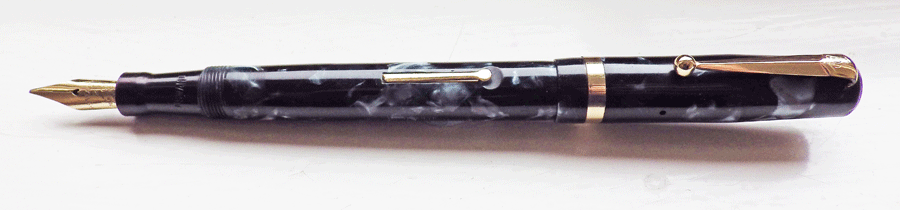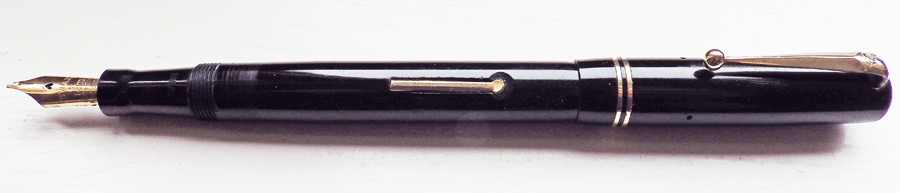
Mabie Todd Swan Self-Filler 6260

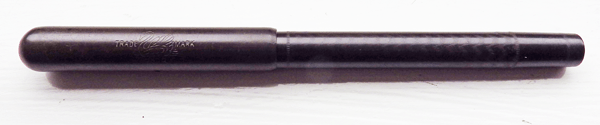
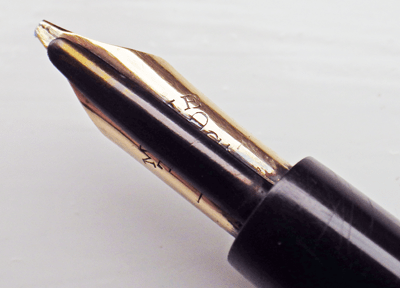
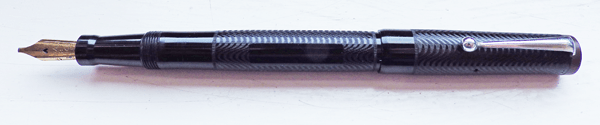
The Swan 6260 is a plain pen, part of the forties wartime line-up. Stephen Hull calls them austerity pens. They’re well made and not without their attraction, with their twin cap bands and the impressed Swan on the cap top. This one has lost some gold on the ball end of the clip but is otherwise very good for an eighty year old pen. I’ve had many 6260s but I’ve never written about one before.
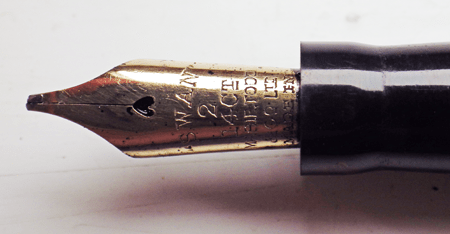
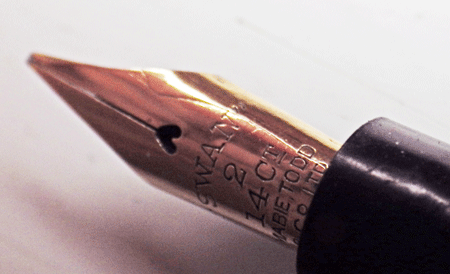
I acquired this pen cheap because it had been dropped and the nib was not only bent – it was cracked and irreparable. I hunted eBay for a No 2 nib. I finally found one in a pen that had a hole in the barrel. It cost me £11. If I had found a No 2 nib alone it would have cost around £25. That’s how it goes.
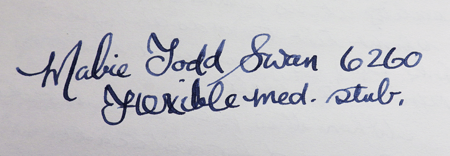
The nib is a medium flexible stub. I’m not much for flexing my nibs but just enjoying the stub with no pressure improves my handwriting considerably. I like the 6260. It’s an unpretentious pen that just gets on with the job of writing and does it very well. It’s not a limited edition or anything like that, I’m pleased to say.
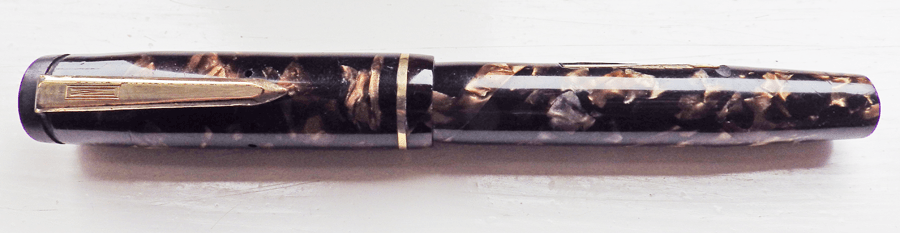
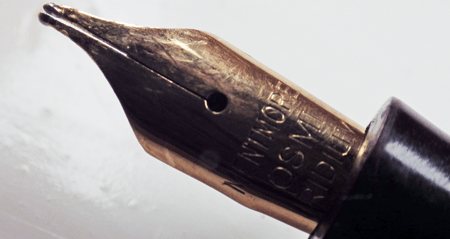
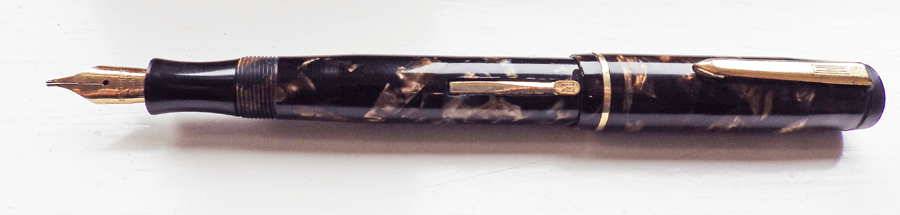
A Late Mentmore Autoflow.

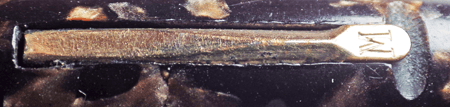
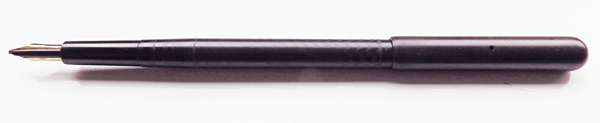
I think this is the last version of the Mentmore Autoflow, with the flat clip and the sculpted lever. I have yet to restore this pen and, looking at the nib, I am hopeful but not entirely confident as it is bent to the side and backward. That’s rather a challenge!

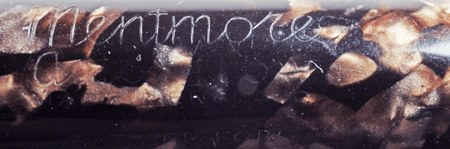
I’m especially fond of this brown marble in any brand of pen. It speaks of the 30s and 40s to me, somehow typical of that period, more so even than other marble patterns.  Mentmore barrel imprints are especially subject to wear as they are not deeply engraved.


The Autoflow from the first version on has always been a well-designed pen that fits the hand comfortably. Not usually flexible, the nibs are often well supplied with tipping material. Given the gradual changes over time and the variety of finishes, one would imagine that the Autoflow would be a good collector’s pen.


The Autoflow comes in both lever and button filler versions. If I was forced to make a choice I think I would settle for the button filler as being an easier method of filling and more aesthetically pleasing with the unbroken pattern on the barrel.

Mabie Todd Swan 1500

The 1500 is the most common eyedropper Swan, the workhorse of the Edwardian period along with others that did not have the quality to survive in such numbers. They are perhaps unexceptional pens but are almost always lifted by their splendid New York nibs.

This example is well worn, a little faded and the chasing is only visible when the light catches it at certain angles. Barrel and cap imprints are still good, the pen holds ink perfectly without the necessity for smearing it with grease and the over-and-under feed is still in good condition. (It is worth stating, as an aside, that the threads on Swans are very rarely so worn that grease is required to hold ink. If the threads are thoroughly cleaned the pen is as ink-tight as when it was new.)

The lettering at the base of the barrel only informs us that the nib is broad but in reality it is stubbish with a slight tilt towards oblique. Ink flow is good and the pen writes very well.

When this pen was made, in 1910 and for a decade thereafter, design was still influenced by the dip pen. With a diameter of 9.25 mm this is a very slender pen. It is the 13.7 cm capped and a whopping 17.7 cm posted. Caps were still friction fit at this date but the screw-on cap would be the next major upgrade.

Iridium

For many years I used the word “iridium” as a shorthand for tipping material. Everyone else did the same and we knew what we meant. Now and again some newbie would loftily inform me that these days it is rarely iridium that is used on nib points. Other metals from the platinum group would be more likely, they would condescendingly inform me. As I wasn’t allowed to actually kill the blighters I stopped doing it and now I always say “tipping material”.

My thoughts on the matter have been about the deterioration that affects some nibs, generally older ones. I have seen it described as a “pumice-like” appearance. The surface – and perhaps deeper than just the surface – is pitted. How does that happen? Platinum-group metals don’t suffer from oxidation or any other form of decay that I am aware of. Inclusions of other metals or materials have been suggested as a possible cause but I see that the temperatures that these hard metals are heated to, in order to weld them to the nib, are such that any other metal would be completely alloyed and could not exist there as separate particles. So what’s the explanation? How do we get these pitted, singing nibs?

Mabie Todd Swan Leverless L200B/60


Here is a very nice 1930s L200B/60. It’s in celluloid with black hard rubber clip screw and turn button. Celluloid is a harder material than black hard rubber so the chasing on cap and barrel has survived extremely well. In fact it looks new. These are the first Leverless Swans, and came in attractive colours as well as chased black.

Though the pen is outstanding in itself what makes it even better is the medium stub. The stub alone gives considerable line variation and this is multiplied by its flexibility. It’s a wonderful nib and could do great things in the hand of someone who can make best use of it.

To my mind, these 30s Leverlesses are among the best of pens and are at least the equal of any modern pen in quality and convenience of use. The Leverless filling method was a huge sales success for 20-odd years. It was easier to fill than either a lever filler or a button filler. The idea that these pens hold less ink than a lever filler comes from pens that have been badly re-sacced in modern times. A properly serviced Leverless will hold as much ink as any other sac filler.

Some More Nibs

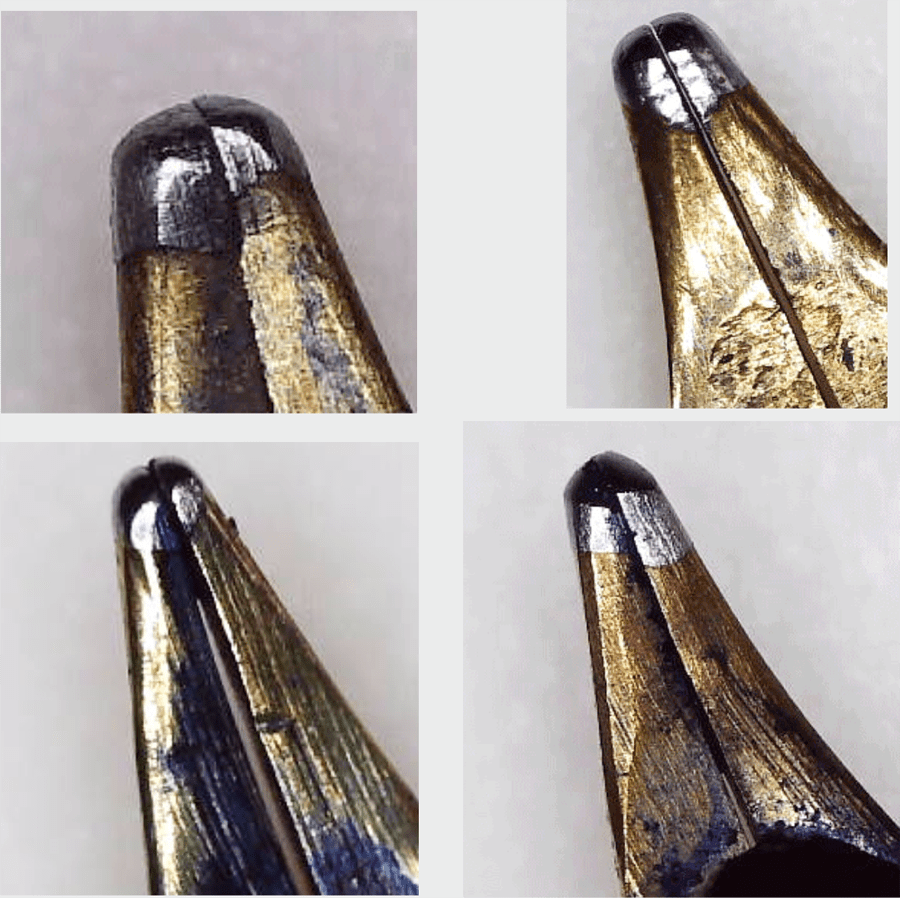
Upper Left Swan Minor No 1

Upper Right Swan Safety Cap No 2

Lower Left Swan 3130

Lower Right Swan 3120

There’s a close resemblance between the 3120 and the 3130, especially when you allow for considerable straightening work on the 3130.  That said, the application of the tipping material is different on them all.  This may be down to the fact that different operatives had their own signature style, perhaps.  Once the tipping is affixed the tips are ground to the required shape.  Maybe it’s me but I think there is beauty in these nib tips.

Some Nibs


Upper Left: Swan No 2
Upper Right: Wyvern
Lower Left: Canadian Parker Duofold
Lower Right: Conway Stewart


Couldn’t be more different in design.  The Swan, an oblique, is very sculpted.  The Duofold looks like it’s down to the gold but there is tipping there, though it is quite worn.  I might do some more of these as the subject has taken my interest now.

Another Hightime

The Hightime is an uncommon post-war pen which I have written about previously at length. The search box will find it. Apart from also being a button filler this pen is entirely different from the previous example. It has a 14 carat gold nib, unlike the other and it is a more traditional style of pen. Unusually, it appears to be made out of black hard rubber. The only other company using that material after the war was Mabie Todd.  The section and nib are reminiscent of some of Wyvern’s post-war styles.

My thanks for photos and information to Paul L.

A Blue Marbled Wartime Swan

Swan’s blue marble is a particular delight. It’s a subtle pattern, disappearing and reappearing over the length of the pen and the blue is a beautiful silver/blue. So when a nice 40s pen in this pattern with good gold appeared I would normally have been bidding high but what appeared to be a cracked nib – though the crack was in a most unusual place – caused me to limit my bid quite severely.

As it happened I got the pen at what I decided was a reasonable price. I had a couple of spare No 2 nibs and I was all set to make the swap but when I looked more closely I was not entirely sure that what I was seeing was not just a deep scratch and not a crack.

I pulled the nib and cleaned it up and a first visual seemed to confirm that this was not a crack. To be sure, I slid it under the microscope and it was confirmed. It’s only a scratch. I won’t exchange the nib; this one is perfectly fine and it has good semi-flexibility.


Despite reduced capacity due to disastrous bomb damage and very high demand to supply servicemen away from home, Mabie Todd’s quality remained as high as it had ever been and the wartime pens are very good indeed.