The Orienta German Piston Filler

I’m back on the subject of German piston-filler school pens again. I’m sure I must have mentioned my enthusiasm for them before, but that’s okay. You must expect a certain amount of redundancy in a blog that’s been going as long as this one has.

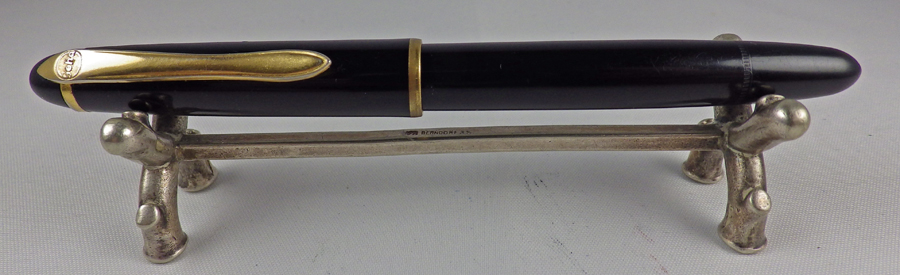
These low end German pens are remarkably cheap for what they are, though there is some variation in quality. The Geha that I wrote about before is perhaps at the upper end of those pens targeted at schoolchildren and the one I plan to write about today is further down the scale. It is an Orienta, a cork-sealed piston filler. I’m not at all sure about the date of its manufacture. Going by appearance I would say that it might be as early as the nineteen-thirties but on the other hand, a successful design might have remained unchanged into the nineteen-fifties.
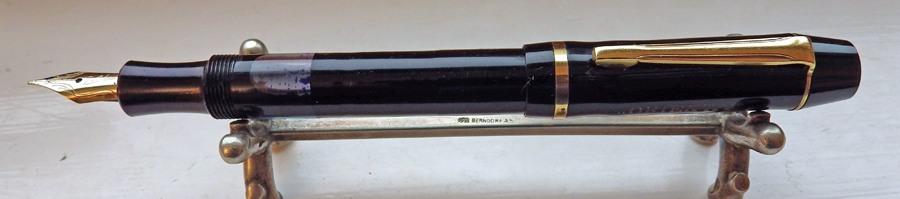
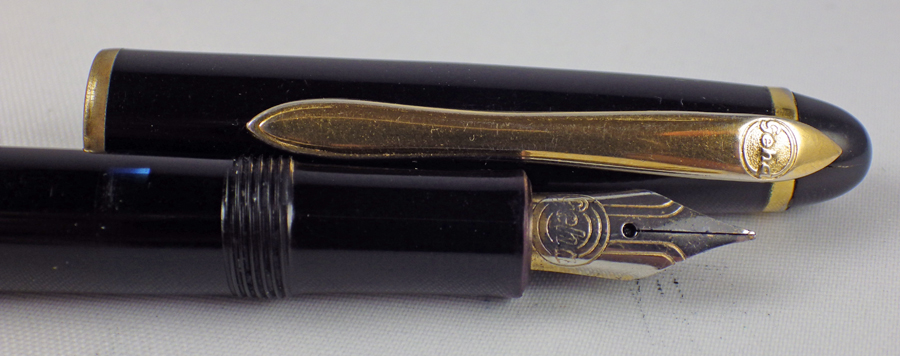
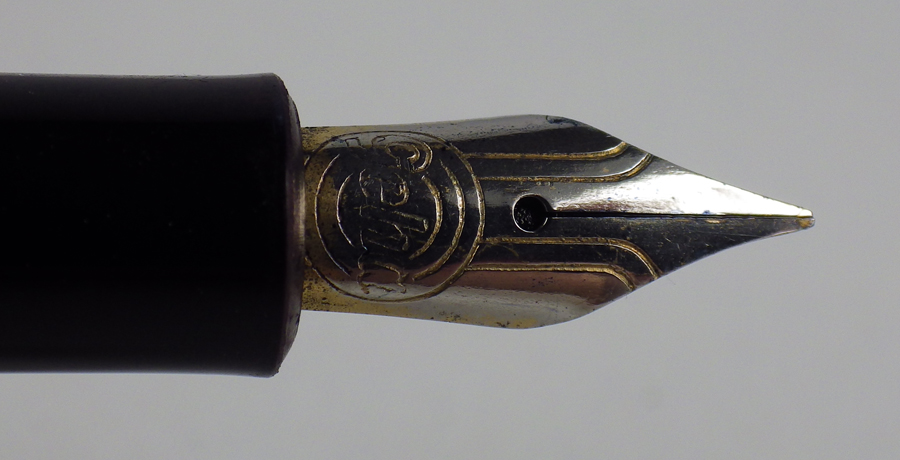
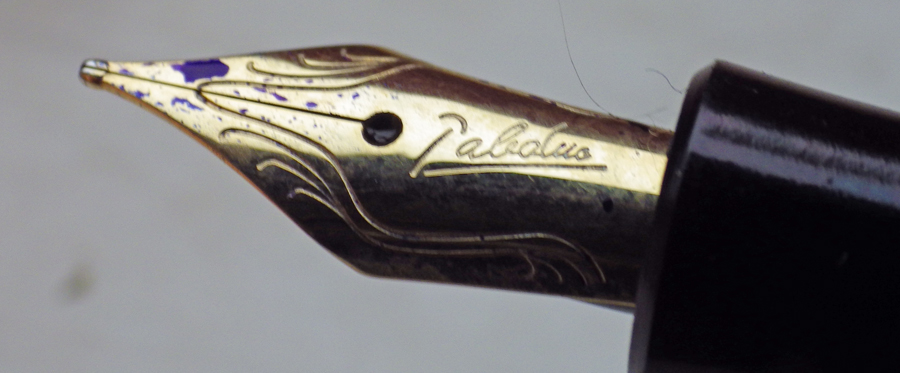
I bought it from a seller in Fountain Pen Geeks, a regular there who specializes in low-cost pens and goes under the moniker of LEXAF. He seems to have a talent for seeking out New Old Stock European pens and I have admired his stuff for some time before I decided on this purchase. He said that the original nibs were no good and he replaced them with Paledua gold-plated steel nibs.
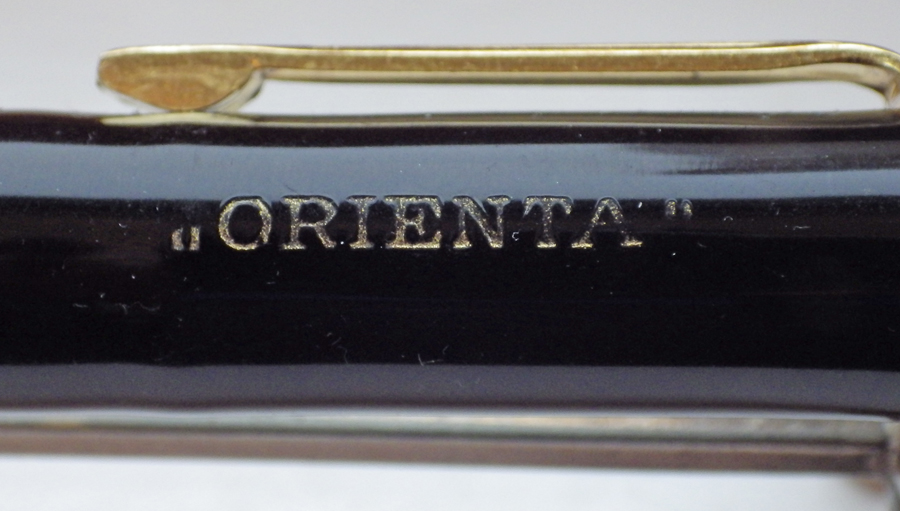
The pen is quite chunky and old-fashioned-looking and measures 12.4cm capped. The barrel looks a little uneven as if there has been some shrinkage going on there but the piston slides up and down smoothly and there is no leakage. The fading gold imprint on the cap reads ‘Orienta’, a strange enough name for a pen but many pens have strange names. The pen holds a good charge of ink and the nib is a firm medium. It’s not quite my cup of tea; I prefer a fine but that’s nothing against the pen, just my preference. The ink delivery is generous but not over-generous. In all, it’s an excellent writer.
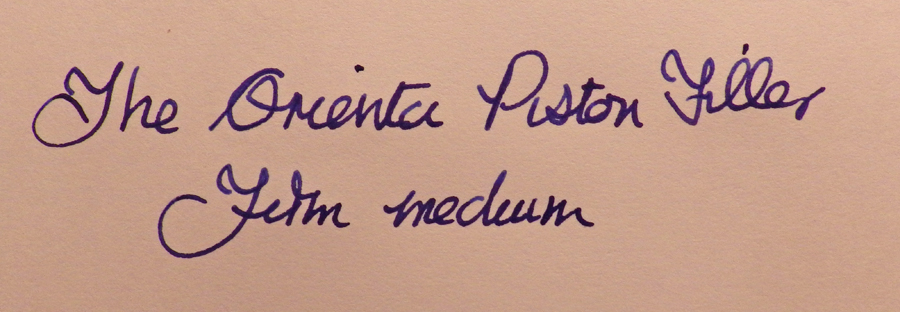
While it’s no Pelikan or Montblanc, this is an excellent, soundly-made German piston filler at a bargain basement price. As I said, it’s probably around the bottom end of these pens. That would make it the equivalent in price of the British Platignum or Queensway. It comes out of that comparison rather well, in the sense that it writes well, doesn’t leak and is robust enough to write for another generation or two. It whets my anticipation for more of the host of low-cost German pens out there.
A Broken Pen and The Reform 1745

I’ve written about this before but I feel I must write about it again.
I bought four pens from the same seller and they arrived yesterday
morning. One of them was crushed. They had been packed in a soft
plastic tube, surrounded by bubble wrap and placed in a padded bag.
During the transport and handling the pens had moved around and the
most robust had crushed the weakest. It was completely
unrecoverable.

The seller recompensed me but that isn’t the point. It was an
interesting Lang’s pen in a subtle blue and black marbled pattern. I
hadn’t seen that pattern before. The nib and section had been
replaced but I have spares. It wasn’t high-value but it was a
rarity. I would have loved to have brought that pen back to some
semblance of what it once was.

I’m sure that padded bags have their uses but they are a menace to
pens. I’ve used them myself when sending out spares but I wouldn’t
use them to send a pen even if it was swathed in layers of bubble
wrap. Pens need to be protected by something rigid. I use postal
tubes. Some people use rigid plastic piping. Others use plastic
tubes that appear to have been made for the purpose. All sorts of
cardboard boxes can be reused. Some people even make up their own
boxes out of reused cardboard. They’re all good. Padded bags are
not.


For years I’ve seen those New Old Stock Reform pens sold in eBay for
tiny prices. I’ve often wanted one but for long I never did
anything about it. This week I bought a Reform 1745 for a fiver.
Imagine! A European-made piston-filler for £5.00. I’ve seen on the
discussion boards the suspicion voiced that some of these pens are
counterfeits. Frankly that’s taking paranoia to a new level. Who in
the world would fake a discontinued pen that requires sophisticated
tooling and can hardly be sold? On examination the build quality of
the pen is quite high. The work that has gone into the construction
of the cap assembly alone would bankrupt the counterfeiter.


I am using it to write this. It’s a slender little pen and that’s
not going to suit everyone. It’s on the fine side of medium and if I
had my druthers I’d rather a true fine. That said, it’s a nice
writer, adequately smooth but with enough feedback to make it easily
controllable. The ink delivery is quite generous. Being a
piston-filler it holds plenty of ink. In its green and black livery
it looks very nice. I find this much nicer to write with than the
last over-expensive new Pelikan I had. I would pay quite a bit more
for such a pen. I’m just glad I didn’t have to!

Sales Site Update

On this Highland day so wet
New pens are here for sale, you bet.
Some pencils of mechanical make
Round out things nicely, no mistake.

Italian Marble, slightly cracked
Can still be used rather than sacked;
And if a Calligraph’s your taste
Then don’t delay, come see, make haste!

Nibs

We spoke about filling systems before. That generated a bit of discussion, always a good thing. Many people find that they start out using one nib type, then move on to another and after a while try something else. Others remain faithful to their original choice for ever.

I started out using flex. I loved the line variation and it made my writing look good. It covered up my somewhat casual approach to letter formation. Also, using a flexible nib well is a kind of skill that is almost a sport. For a long time I had a flexible stub and that added another element to the fun.

Then I decided that I was making life too easy for myself. I should try to improve my writing and use a fine nib which shows no mercy. If your Cs look like Es and your Ss are a sloppy curl, then it’s going to show with a fine nib. My writing hasn’t improved a whit but I love that fine line.

That’s not all of the story, of course. I handle hundreds of pens in a year and I write-test every one. There are several other nib types that I like. A fine or medium stub is a real pleasure for me. You get some pretty line variation without the care you have to take with a flex nib. Oblique stubs are an especial delight for me and I think that one of these days I’m going to settle down with a good Swan flex oblique stub. I’ve come across a few over the years and I kick myself for having sold them. Another one will come my way some day I’m sure.

Plain, ordinary medium nibs don’t appeal to me. Most of them seem to lack any kind of character. I’d be as well writing with a gel pen. I appreciate that many of them are dependable but they’re not for me. I’ve had fun with broad, wet nibs. If I was producing, say, a hand-written poster, I would want one of them. For everyday writing they’re too bold, demanding expensive paper to avoid feathering and show-through, and not giving many mpg with the ink.

Italic nibs are very popular and I’ve had many. If you’re a serious calligrapher you will need them. I enjoy playing with them. I have a Sheaffer Calligraphy Pen on my desk right now and I use it as a sort of signature pen sometimes but really I don’t have a use for such things. They are little more than toys for me.

There are other sorts of nibs. I’ve had various ones that announce themselves to be music nibs. Most had two slits. Some were flexible, others were nails. I can’t read music, never mind write it so I passed them on quite quickly.

I hear people discussing signature nibs but I don’t know what they are. Then there are those Japanese/Chinese nibs with a bend at the tip that allow you to vary the thickness of the line by changing the angle of the pen. There are probably quite a few others that I can’t bring to mind right now.

What about the rest of you? Do you have a nib preference or do you write with whatever comes to hand? As your preference changed over time? Do tell

Geha

I’m using a Geha school pen today, a piston filler with a fine steel nib. It’s quite a small pen but it’s comfortable. It’s one of my favourite pens for a couple of reasons. It’s a splendid writer with a good ink capacity and exactly the right size and style of nib for me, and it came from Hilde, an old friend of my mother’s. When she emigrated to the USA she brought the pen with her from Germany. She heard about my interest in fountain pens and gave it to me just before I left for Scotland, so the little Geha made its second crossing of the Atlantic.

This is one of the cheaper Gehas, but they made some quite high quality pens back in the fifties. At one time they were quite a strong competitor to Pelikan but as time passed and the fountain pen market shrank Geha began to have difficulties and the company was taken over by Pelikan.

I read in an online blog that Geha was one of the cool pens to have in German schools in the sixties. It has a little button at the base of the feed which enables an “emergency supply” of ink, enough for another couple of pages. That, it seemed, was highly esteemed by the school students and was enough to give it an edge over Pelikan in the cool stakes.

I agree. Even though the plating has worn off the nib of my Geha, I think it’s supercool.

Old Pens

I’ve never found an old pen that I didn’t like. I’ve found quite a few new ones that were hard starters and practised the art of skipping. They were often quite annoyingly difficult to fix too, so I can say that there are some modern pens that I don’t like. There are even some that I hate because they persist in their wicked ways.

Old pens are generally easy to repair. There’s a routine, and if you follow that they respond wonderfully. Though externally they may show the wear and damage of their years, once they are re-sacced or re-sealed and have had their sections and feeds cleared of deposits of old ink, they are effectively brand new.

That’s true of the great pens, the Onotos and the Swans, the Conway Stewarts, the Parkers, Sheaffers, Wahl Eversharps and Conklin Crescent fillers and it’s often also true of the lesser pens we come across.

When you deal with as many pens as I do, there’s a tendency to become blase’ about it. Most of those old pens are fixed, write-tested and put up on the sales website in a matter of days. I write with them enough to ensure that they perform as they should and that’s all. I know that if I used them for longer I would begin to appreciate their particular charm – every one is different – and I would be reluctant to part with them. Indeed, from time to time a pen I buy for resale has so much appeal that it goes into my box of personal pens. I try to be strict about it and not allow my accumulation to become excessive. I know, though, that every one of those pens that I sell has its own special charm that its new owner will discover if it was bought to write with. Those who buy pens just to complete a collection will doubtless derive a different pleasure from their acquisitions. Me, I’m a writer and that’s the pleasure I derive from them.

The most expensive pen I have is my Ford Patent Pen. It has a wonderful flexible nib and when I fill it without a bottle full of ink it’s going to be on my desk for at least a month. It starts heavy and gets gradually lighter. At the other end of the scale is my Platignum Varsity which is an equal pleasure to write with though it isn’t flexible and needs refilled fairly often.

I’m going to bring this fairly pointless ramble to an end quite soon. Really.

Perhaps the point that I’m trying to make is something like this: I want the pens that I pass on to my customers to be a pleasure for them to use, as much of a pleasure as I get from the pens that I keep for myself.

Smartie Says

Hi Pen Lovers,

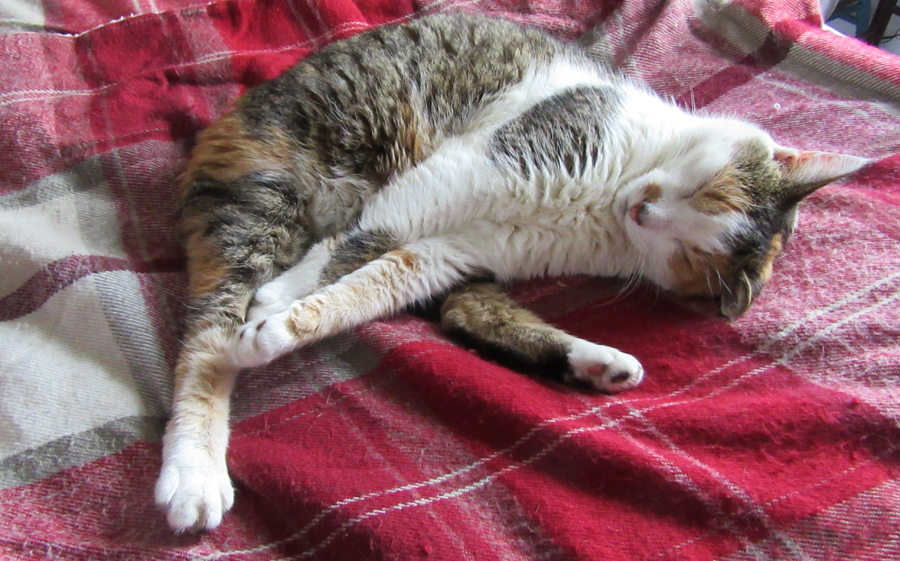
Smartie here. I fixed 11 pens and pencils this morning. My human assistant helped a bit but I did most of it. Except when I saw another cat about three gardens away and went to have words with it. Sharp words. When I came back my assistant had done hardly anything. My paws are utterly worn out.

I’ll have a nap until I recover then I’ll go and sit under the birdfeeder for a while. My humans think I’m doing it out of spite to keep the birds away but in fact there are mice which come for the seeds that fall off the feeder. Mmmmmmmmmmmmm. Tasty mice! By then that lazy human of mine might have got some writing samples done. I have to keep at her all the time.

That Blasted Award

David kindly commented to me that the award is a scam, designed to harvest subscriptions for their feeds. I was aware of that and I didn’t think much about it. Those interested could ignore the instruction to sign up and just have a look at the list. If there were any blogs in there that interested them they could find them through a search and follow them in whatever way suited them.

I wasn’t surprised that the whole business was a baited hook. That’s how the Internet has been ever since the foolish decision to let business in, back in the early eighties. What did surprise me, though, was the nature of the list of blogs once I got around to having a look at it. Many of those listed are not really blogs at all. They are commercial advertisements. If the posts are along the lines of, “we have this new pen just in and you can buy it for the amazing price of $750,” and the rest of the entry is covered with banner adverts, that’s just not a blog to my mind; for it to be a blog, it shouldn’t be selling anything and it should be sustained original writing.

Just as soon as I can figure out how to do so, that badge is coming off my blog.

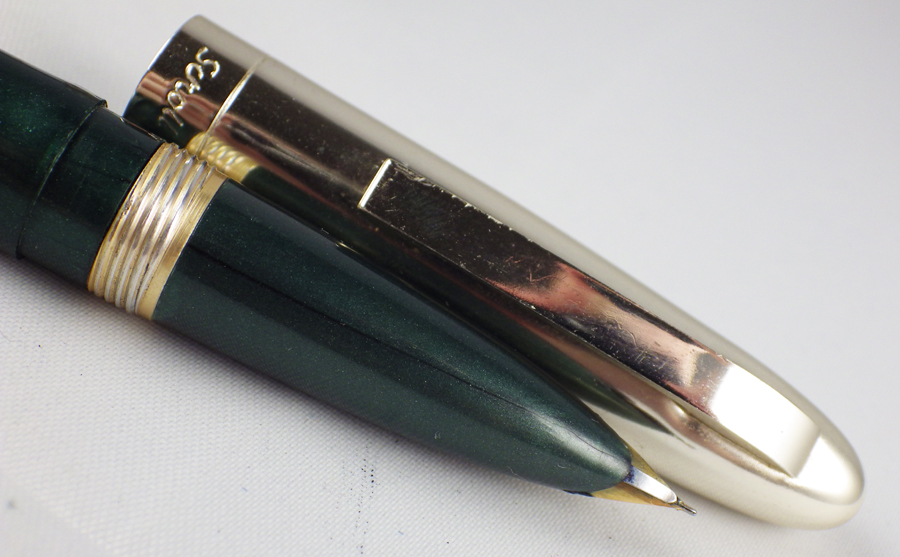
Now here’s a pen I know nothing about. My husband says he has a vague memory of the name, which is Scroll, but not of the pen. It’s evidently from the lower end of pen prices and my guess would place it in the fifties or sixties.

The barrel is in not unattractive metallic green and the cap is in that gold-alike plastic that Platignum also used for their very worst pens, the ones that were guaranteed to give you inky fingers.

This one isn’t so bad, though. The folded tip hooded nib does an adequate job and the pen writes quite well. The area where one would naturally grip the pen is quite thick, making it comfortable to use for a prolonged period. It’s not a bad pen and no one can complain about its durability – it’s still here in working condition after something like fifty years and maybe more.

I’m not suggesting that it is a valuable collector’s piece or anything – in fact it’s barely saleable, but it is an interesting example of one of the many cheap pens that people used. It’s a pretty nice writer as well.

Why I Write This Blog

So I got an award! I was No 48 in the list of 75, I believe. It gives a person cause for reflection so here’s why I write this blog.

When I started trying to research British pens online there was very little there. The late Jonathan Donahaye’s wonderful Conway Stewart site was a tremendous resource but that’s about all there was. The Americans were miles ahead with very good sites on Parker, Sheaffer and Wahl Eversharp. There were a good many specialist sites and blogs that have lots of other information on American pens.

With absolutely no expertise at all, I began writing about the various pens that came across my bench. I might not know all their history or how they related to other pens but I could describe them and give my opinion of them. My intention was that anyone who had an old pen that they had never seen before would have a place where they might find a little information about it. In time, I learned a little more and my blog entries contained more information. I have written about some brands and even some models several times as my own knowledge grew.

As the years went by, other British specialist sites began to appear, Burnham, Langs and Mabie Todd among them. That meant I could do other things – discuss pen books, illustrate repairs, list basic repair tools and write general articles about the current state of pendom.

I started to look at more modern pens too, though most had to be at the cheaper end. I found some good and some very good pens that way.

Occasionally, and I try to keep it very occasionally, I let my more controversial side have its way and rant about this or that. It gets it off my chest.

One of the main reasons for the blog is that I simply love pens and I love to write, in both senses of that word. Everything you see here is prepared longhand using whichever is the pen of the day. I love the act of laying ink on paper and getting used to a pen I haven’t tried before. In the other sense, I love the linguistic process of putting an article together. In that sense, I have always written. I have to write.