If you go to my search box, up there on the right hand side, and enter ‘Rosemary’ or ‘National Security’ as a search term, you’ll find some exceptionally beautiful pens, jade and lapis lazuli among them. Those pens pose some interesting questions.
In a sense we know quite a lot about them. They were manufactured on behalf of British Carbon Papers by Henry Stark, Son, and Hamilton and possibly Conway Stewart. We know that ‘Rosemary, that’s for remembrance’ which appears on the pens and the boxes is a Shakespearean quote from Ophelia’s speech in Hamlet. ‘National Security’ appears to be self-explanatory. And yet knowing, those things, there seems to be a deeper mystery. No one seems to know very much about British Carbon Papers, which must have been a company of significant size in the 1920s and 1930s, by time it could have these high quality pens made. It would be wonderful to know who in the company was tasked with the creation of these pens.
It would also be enlightening to know who decided on the names of the pens and what the thinking was behind them. After all, ‘Rosemary, that’s for remembrance’ and ‘National Security’ are quite unusual names for pens. It is said, with what authority I know not, that Rosemary is in remembrance of the fallen in World War I. I certainly wouldn’t dispute that. It seems highly likely. Why did the person responsible hold remembrance in such importance that he/she named a range of pens after it? Were family members of the directorship of British Carbon Papers casualties of World War I?
And then ‘National Security’. Isn’t that a rather odd thing to call a pen? Wracking such brains as I have, I can’t think of another British pen that’s called after a concept, especially a concept that has nothing to do with writing. Again, no one could sensibly suggest that national security isn’t important and, in a sense, it does tie up with the theme of remembrance in that the war was an extension of national security. Those thousands of soldiers gave their lives to keep Britain secure.
We’ll never know with certainty but there seems to be a story there. Someone in British Carbon Papers was still grieving a family loss when they sent out the order for the company’s pens, and they also wanted to emphasise the need for military readiness. Of course, we know now how right they were, and that another conflict of immense proportions was only a few years away.
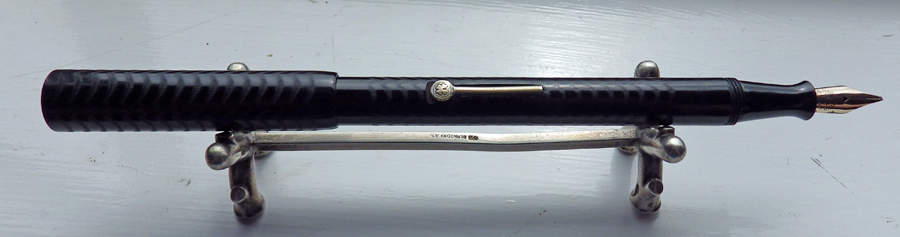
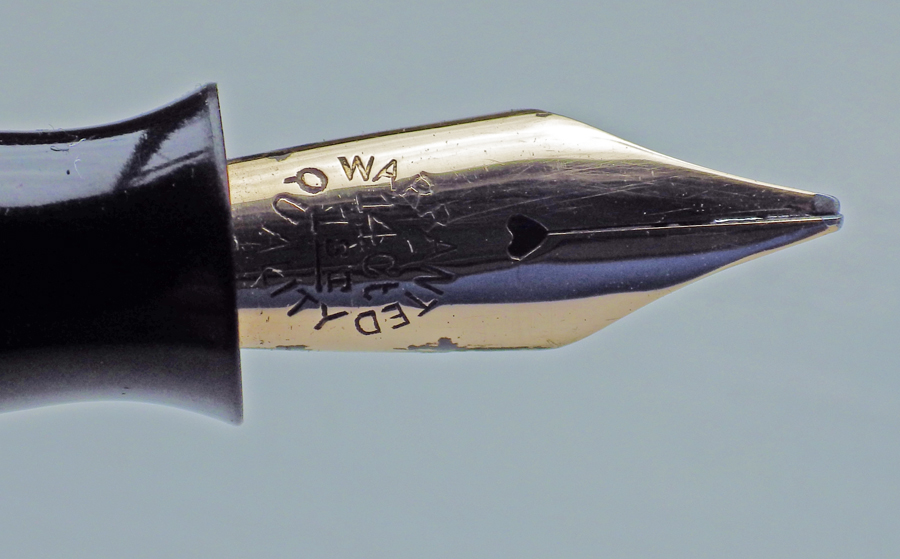
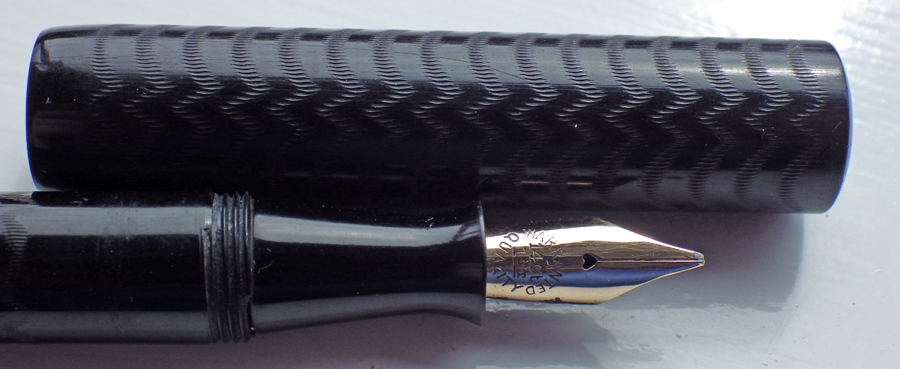
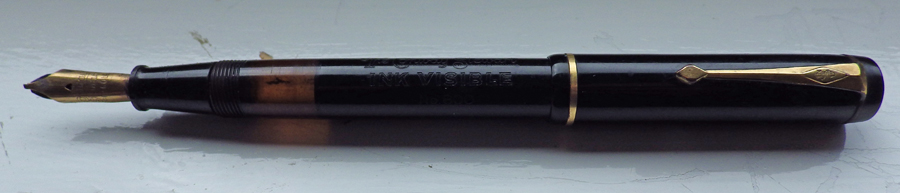
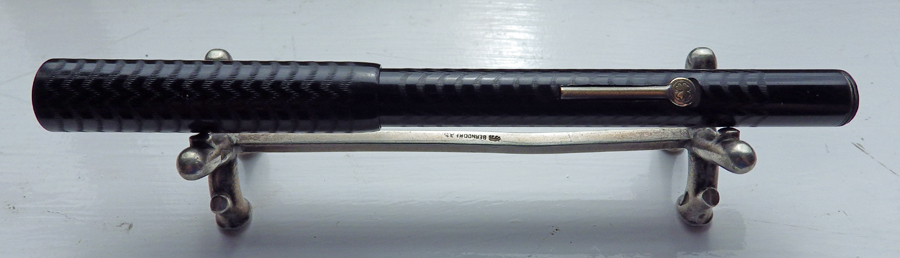 There is a language to the design of pens and with experience you can read it. Straight sided barrel and cap, bought-in lever, threading at the end of the barrel to take a posted cap: all this adds up to a recognisable type of pen. Nobody knows who made them. It might have been Mentmore, Wyvern, Langs or just about anyone else. It might even have been a pen manufacturing company whose name never occurs in any context. These pens were cheaply mass produced as giveaways or inducements to buy for commercial companies that had nothing else to do with fountain pens. Often they were given away by newspapers in return for postage and the mastheads of a week’s worth of daily papers.


 Goodwriterspens's Blog