The Dart

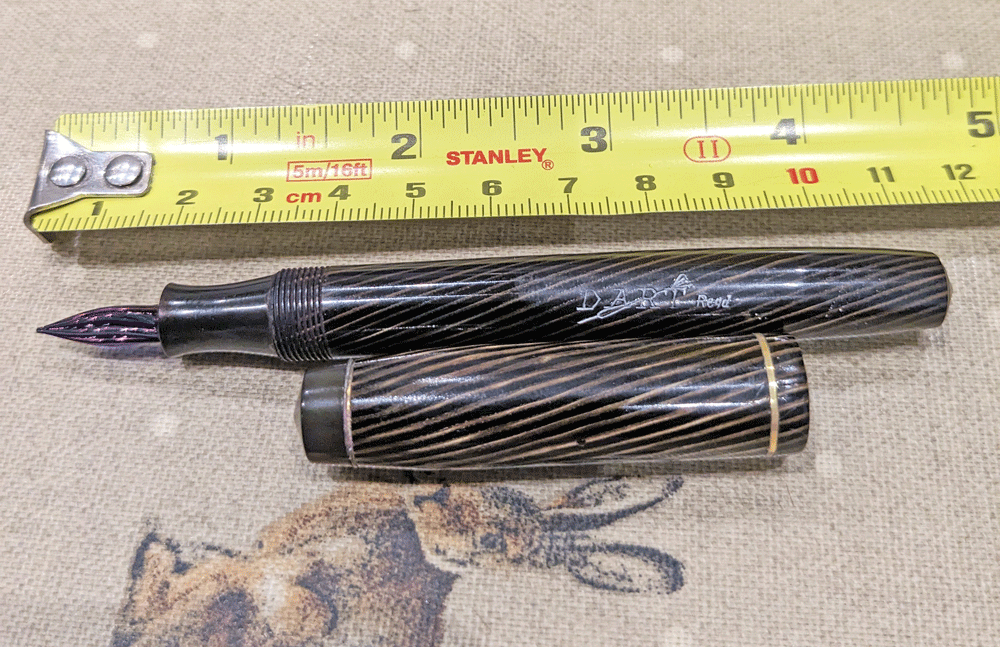
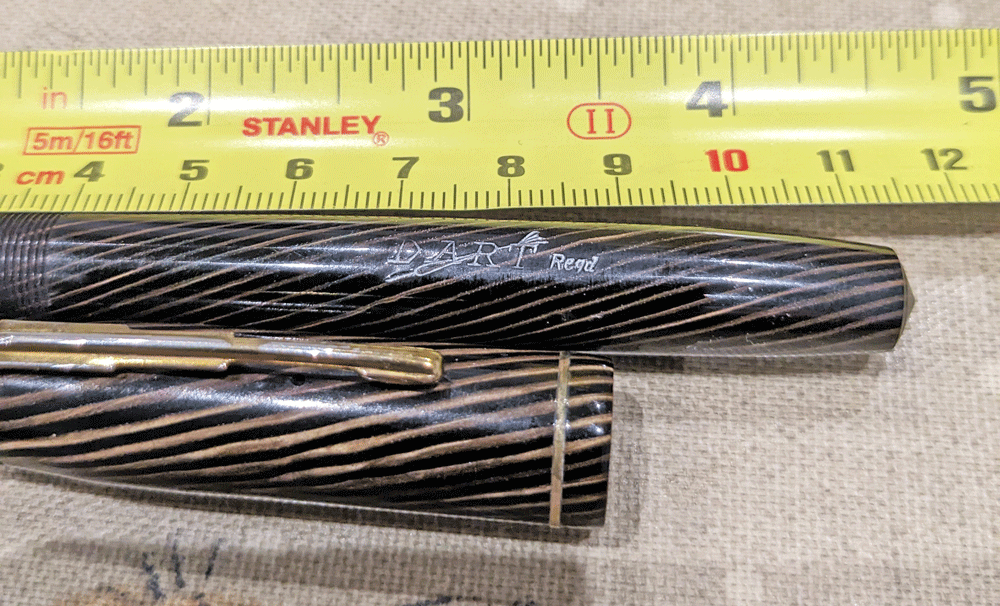
Here’s The Dart, a very handsome 1930s pen, bearing a glass nib. Those nibs were popular in the hungry thirties, keeping the price of a useful pen down. I’ve seen many of them, mostly British or German.
I had one that was German-made, as announced on the barrel. The imprint had been crudely scratched out with a knife. The owner couldn’t afford to throw his pen away but no longer wished to be associated with Germany, probably after the outbreak of World War II. 
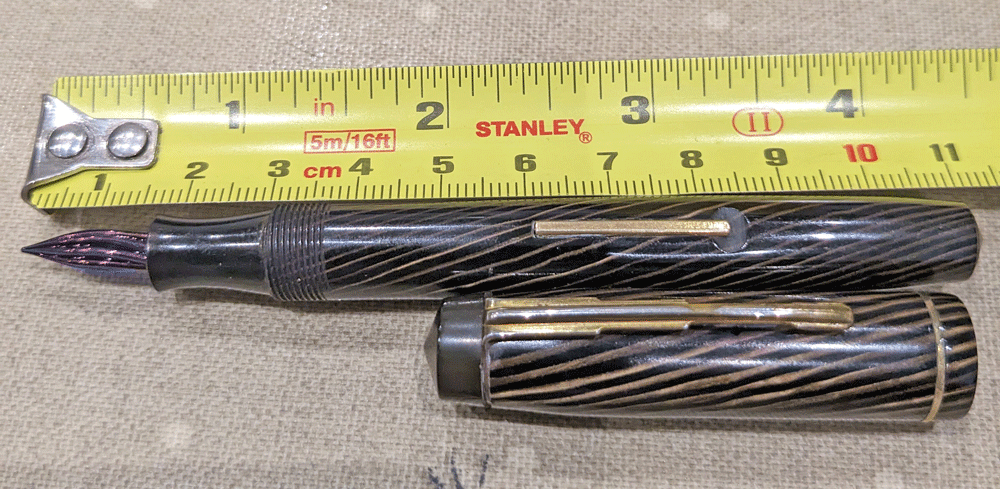
Back to The Dart: that’s extremely attractive celluloid. Glass nibs were very practical though somewhat ballpoint-like. Very good for entering figures in ledgers. The clip is one that appears on other pens and could doubtless be bought in.

The Dart remains as much a mystery as ever.

Exciting Times

There’s a Chinese curse, “May you live in exciting times,” the suggestion being that exciting times are generally not a good thing. However, those of us who are interested in old British pens have an exciting future. The long anticipated book on the smaller and less well known pen makers isn’t far from publication. I haven’t seen it but I hear that it isn’t far away. I am sure that there are many new stories to be told and historical puzzles to be resolved. Exciting times indeed!

Disappointment

I dearly love to write. It’s one of the favourite things that I do. However, I came upon a book that I bought 40 years ago, in the flyleaf of which I had written. I compared my writing then with my writing now and I am sad to say that despite my best efforts my writing was better then than it is now. The reason, quite simply, is arthritis. There are certain of the small movements one makes in writing that induce pain. You learn to avoid them and to create letters in a way that doesn’t hit the nerves.  I have noticed that my “ing” has become a squiggle followed by a letter that is in no alphabet known to mankind. After all the effort I have put in over the years to make my writing at least legible I am quite sad at what is happening to it.

Am I alone in this? Do any of you find your writing deteriorating or changing with advancing years?

Facebook

For some time now I have been copying the blog links into Facebook. I ask people to comment on the blog rather than in Facebook as the comments are archived in the blog and are available for later readers. As that request has been consistently ignored I won’t copy articles to Facebook in future.

The Decline of the Vintage Pen Hobby

In correspondence with an American collector we bemoaned the decline in interest in vintage pens. This was part of the reason for my retirement from pen sales. I don’t think it is quite as bad here as it is in the States where top quality uncommon pens have become unsaleable, even at pen shows, for some sellers at least.

The new generation of pen fanciers seem only to want new pens. That’s fine. There are a lot of excellent new pens around. If I didn’t have so many pens already I would buy some of the gorgeous pens Japanese companies are making.

But there are two things we lose by the concentration on current pens. The first is that writers are no longer acquiring first class old pens for much less than the cost of new ones. There’s nothing made today to equal a Waterman 52 or a 1920s Swan for sheer writing pleasure. Great as many modern pens are, they don’t have the nib variety of those older pens. I could add so many other great manufacturers but take these to stand for all.

The second thing we are losing is the great discussions about old pens; who made them, when they were made, the materials used and so on. I think back to the long discussions on the boards of yesteryear (mostly gone now) and I regret their passing. There is – or was – so much knowledge and expertise out there. I think of the various collectors who could date a pen by the length of the lever or the fixing of a clip. They’re not in FPN or FPG. Some may be on Facebook but their expertise is not archived there in an accessible way. 

Time moves on and we must accept that those new to our hobby wish to do things their own way, as we did in our time. We are allowed to regret the passing of that aspect of our hobby.

The Viceroy Combo

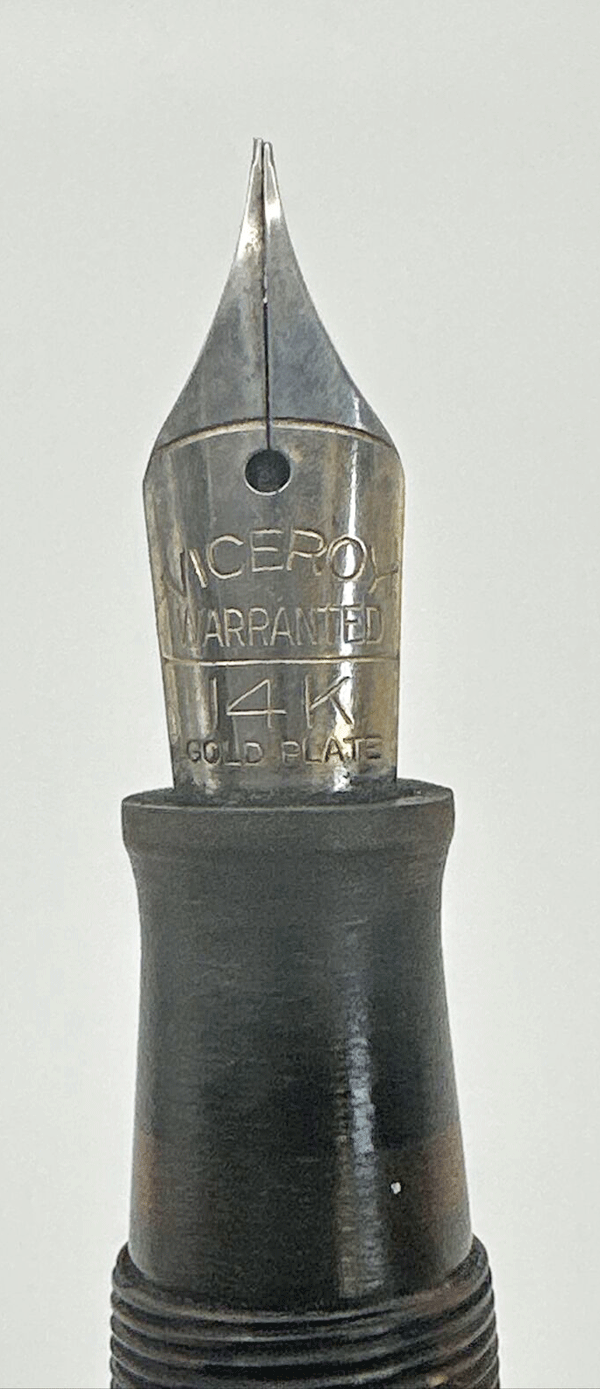
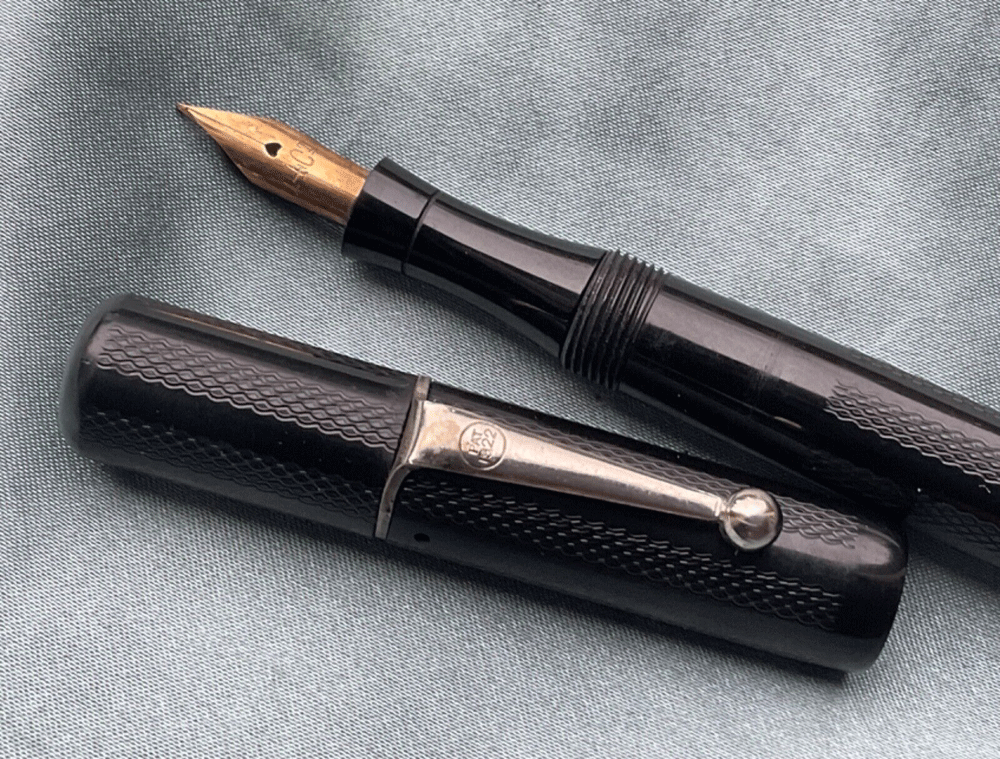
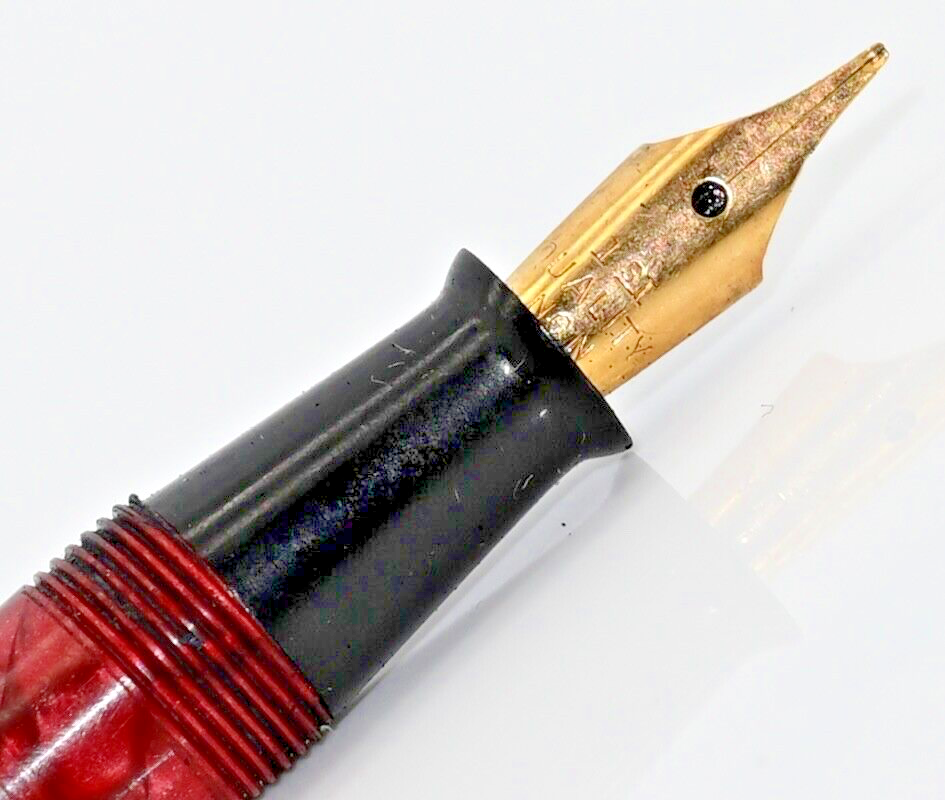
Another interesting combo has appeared in eBay: The Viceroy. That sounds like the kind of name Langs would have used but nothing in the appearance of the combo suggests Langs The name Viceroy is imprinted on the nib, lever and clip. It bears some slight resemblance to a Waltham combo I have. Could the Viceroy be American?

With its plated steel nib and evidently thin plating on the metalwork it’s unlikely to have been expensive. Its greatest appeal is in the very attractive celluloid. 

I am unable to find another example of this brand and it doesn’t show up in any of my reference material. Any ideas?

Many thanks to juyo8990. Sales listing https://rb.gy/xa2sbc

Threaded Sections

Recently a customer asked for help with a pen she had bought from me, a Swan 3120, the smallest Swan of its time. These pens have screw-in sections. When restoring them it takes a little fiddling to ensure that the sac doesn’t become twisted. 

The customer had used the pen for ten months without any problem, then it didn’t take a proper fill anymore. It would only write for a few lines. I asked her to send it back and, sure enough, the sac was twisted. One can speculate about how the sac became twisted after ten months. 

In any case, I fitted a no. 14 sac rather than the usual no. 16 one to ensure that there would be no repeat of the twisting problem.

There are situations where a screw-in section makes sense. A lever fill pen is not one of them. I’ve never understood why Mabie Todd made this decision when friction-fit sections had worked perfectly well for decades and made sac replacement so much simpler.

It was around the same time that they installed brass threads on the pens, an equally bad design. The brass thread on the barrel wears out the plastic thread on the cap.

Heaven forfend that I should criticise Mabie Todd, the finest pen maker of all (in my opinion) but the designers and planners came up with some weird ideas for a year or two. It’s not to say that we can’t make those pens work. It just adds some time-consuming and annoying work-arounds to the process.

An Early Chatsworth

It isn’t always obvious what you’re looking at when confronted with a list of vintage pens on eBay. Take this one: a Chatsworth. Not recognising what it is, you might pass on by. What it is, is a chance to acquire a high quality pen, often at a reduced price because it isn’t known by all the potential buyers.

Chatsworth pens were made for Boots the Chemist, usually by De La Rue, the Onoto people or later by Burnham. The seller identifies this pen as by De La Rue and he may well be right though it doesn’t have the De La Rue sunburst on the lever nor the branding on the nib. At around 1925 it may be too early for these things.

I’m not writing an advert for the pen – that’s not what I do – but I am grateful to eBay sellers who allow me to use their photos and write about these interesting pens. This one is especially interesting to me just because of the absence of the branding marks usually seen on De La Rue Chatsworths. One of the other things that attracted my attention was the outstanding condition of this boxed black hard rubber pen.

Many thanks to Allan (arty4arty) for permission. Pen sale is here:https://rb.gy/ojtoqk

The Regency

I’ve written about the Regent, a very nice pen made by Langs but I haven’t come across the Regency before. It’s a handsome lever-filler of 1930s vintage.

Unfortunately I can’t say a great deal about it as my searches found one or two others including a snakeskin but not much information.

Anyone know who made this pen?

Thanks to Robert, stepshef-8 for permission to use his photos. His sale is here: https://rb.gy/zo8wkc

Old Inks

Like most fountain pen users I am interested in ink; not so much modern inks which multiply by the day, but vintage inks like Stephens, Swan, Webster’s Diamine and earlier Parker inks, all of which I use. There are others that I have accumulated that might need a little work before using. These include a large earthenware bottle of Stephens Blue/Black, another earthenware bottle of Hindoo Red (manufacturer’s name indecipherable) Collier’s Black Ink and a glass bottle of Stephens Black.

Beyond the actual ink itself it would be good to create a list of old ink makers. I’ve come across them in old paper advertisements and on bottles offered in eBay among other sources. I might make a start on that.