The debate about re-blacking hard rubber pens has died away of late, largely because no effective method has been publicly available. However, a new re-blacking material has appeared on the market and you can find out about it here:
http://www.lbepen.com/deoxidizer-instructions
I have seen the results of using this method of re-blacking and I confess that I am impressed. A very thin layer of oxidised rubber is removed from the surface of the pen, exposing the black material underneath. Imprints and chasing appear to be unaffected.
I continue to have reservations. In the short term, the pens appear undamaged and it is even suggested that the process well make them less likely to oxidise in future. What of the longer term, though? Will bad effects appear somewhere down the road?
My advice to those who wish to use it would be to avoid employing it on rare or expensive pens for the time being. It would be prudent and fair for restorers to make buyers aware that pens have been re-blacked using this method.
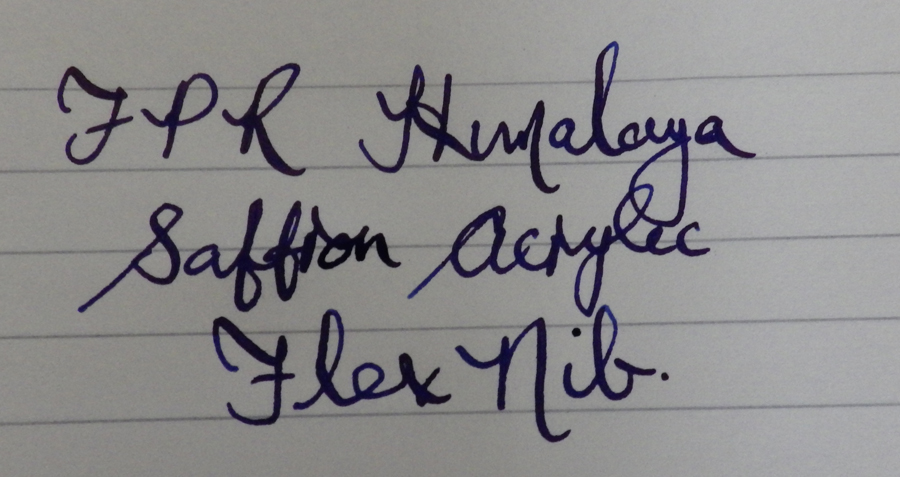
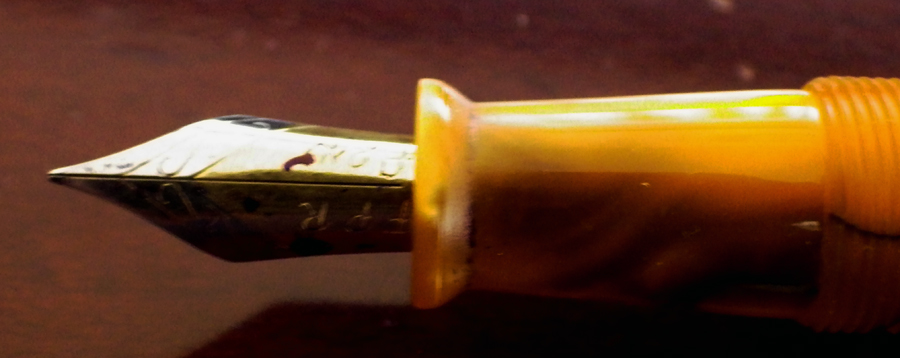
 This is my first pen review in quite a while. Sorry to start with a modern pen but it was what I had to hand. This is a Himalaya from Fountain Pen Revolution. Capped, it measures 13.4 cm, so it’s average sized for a modern pen. The acrylic is quite spectacular. The cap fits with a turn and a half but the section/barrel thread is much longer, allowing for the pen to be used as an eyedropper filler, I assume.

 Goodwriterspens's Blog