I somehow managed to catch the reflection of my strip-light in these photos. Please forgive.

Stephens had a 106 in their line-up from 1935 on, but this pen is clearly not of that date. There’s no black art about Stephens’ numbers, unlike Conway Stewart or De La Rue. A 106 cost ten shillings and sixpence. It’s as simple as that.

The pen is sturdily made with quite thick material in the barrel and cap. This makes it feel a little more solid than some pens of the time. The metal trim is generally good, though there’s a little bit of plating loss on the high points of the clip. The nib, though a warranted one, is clearly good quality. The streamlined shape of the pen suggests that it’s later than the more angular Stephens pens we usually see.
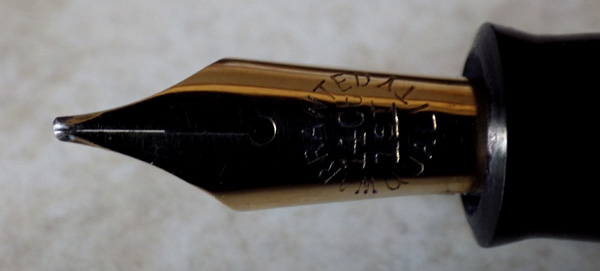
From 1950 Stephens withdrew almost entirely from the production of gold-nibbed pens and concentrated on their inks and ballpoint pens. In the late fifties, when there were talks between Stephens and Waterman with the possibility of a merger, Jif Waterman produced some colourful pens for Stephens, and I suspect that is what this is.

It’s a beautiful pen with glowing patterned plastic. It’s a pity that so few of these pens were made with the result that they’re not often seen now.
- Comment
- Reblog
-
Subscribe
Subscribed
Already have a WordPress.com account? Log in now.
 Goodwriterspens's Blog