A Jinhao 992 Up For Grabs!


I have here a Jinhao 992. It’s a great little pen. It measures 13.5 cm capped and the cap is screw fit. It’s a cartridge converter and it is transparent and amber coloured. I’ve been writing with it and I would describe it as faultless. As I say in the writing sample it’s a firm fine and it has good ink flow.

The thing about this pen is that it’s going to belong to one of you. All you have to do is tell me why you’re the one who gets the pen.

The Best Pen (Not Your Favourite, the *Best* Pen)

There’s a discussion going on in one of the pen boards on the subject of, “which is the best pen?”  In a way it’s a silly subject because there is no best pen.  There’s a multitude of really good pens and it depends on what you want from a pen.  In another way, though, it opens up an interesting discussion where unexpected pens are brought forward.

For myself, most of the pens I would consider as best come from the earlier decades.  Heading my list, I think, would be an Onoto, one of the slender ones from the teens or twenties.  Splended flexible nibs, the best filling mechanism and black hard rubber.  What more could one ask for?  Another possible is the Waterman 52 in red ripple with a flexible nib.  Any one of a number of 1920s Swans would be a winner as well.  Superb nibs and style in spades.  I often think that no subsequent pen has been better than those 1920s Swans.  They, too, would be a contender for the best pen.  I have to admit that there are one or two modern pens that are in with a shout as well.  My Vanishing Point is so convenient, has a great nib and has a style all of its own.  I have a Platinum 3776 in burgundy.  It’s a nice pen to look at and it has a superb soft fine nib.  It’s not at all flexible – not a requirement for me for  everyday note-taking and blog-writing – but the softness makes it very comfortable to write with.

Is that it?  Are those all my contenders for the best pen?  Well, no.  I used to have an early Sheaffer Flat Top in black hard rubber.  The nib was an absolute nail as many Sheaffers are, but it was a delight to write with.  I wish I still had it.  I also had a Conklin Crescent filler – one of the real ones – not those recent copies – and it was a superflex.  That was my pen for correspondence for a while.  It enhanced my writing enormously.

Looking back over my list there are obvious gaps, large pen manufacturers that don’t appear.  There are no Parkers, for instance.  I’ve had many Parkers that I’ve enjoyed, both English and American, but none of them have had that mixture of characteristics which would qualify them as best.  Perhaps if I got my hands on one of those open-nib Parker 17s it might qualify.  I had one some time ago, but it sold quickly and I didn’t have time to really enjoy it as much as I would have liked.  No Conway Stewarts feature, either.  They include many beautiful pens and an immense variety of styles and nibs.  I have quite a few in my “collection” but none of them inspire me in day-to-day use.  The pre-war 286 comes close, but Conway Stewart nibs don’t really compete with some of those I have chosen.

Wahl Eversharps, Mentmores, Croxleys, Summits and many others are all great pens that fall short of best for me for one reason or another but may work well for you.  I would like to hear which pens you consider best.  Surprise me.

Jinhao 950

I’m not a collector. When I buy pens for myself, it’s to use them. I’m allowed to make an exception, though. Just once.


I love blue and white porcelain, and I’m quite attracted to Chinese dragons, too. Some years ago, this ridiculously cheap pen that fulfilled both of those requirements caught my eye. I paid whatever the paltry sum was, waited a few weeks for it to travel from China by mule-train and it eventually arrived. I wasn’t disappointed. Viewed purely as a porcelain blue and white object, like my dinner service or the little ornaments I have, it was beautiful. Not a work of fine art, you understand, but an eye-catching little item, worth every penny of the £1.50 or whatever it was I’d paid for it.

Viewed as a writing instrument it had rather less appeal. It was an awkward shape and it was quite heavy. That didn’t matter, though. I had no intention of writing with it. For years it adorned my desk, the top of the bookcase or my chest of drawers. It was always in sight and I was glad to see it. It didn’t fade. The blue remained blue and the white kept its purity.

I don’t know why – goodness knows I had plenty of work to be getting on with – but I picked up the dragon pen and decided I would see how well it wrote. I unscrewed the barrel and was gratified to discover that the pen was fitted with a converter. I opened the bottle of Diamine Sargasso Sea on my desk – I’m not one of those who must suit the pen with an appropriate ink from my collection of hundreds – I just have one blue ink, one green one and one red one. I never use the red one. Anyway, I plunged the nib into the ink and twisted the end of the converter. It sucked up enough ink to be going on with and I set the pen aside, closed the bottle and prepared to write. I applied nib to paper and was pleased to find that it was unexpectedly smooth and there was good ink flow. Unfortunately some of the ink flow was all over my hands! I couldn’t quite tell where the leakage was coming from but it was copious. I gathered up the whole mess and dumped it in the kitchen sink.

Ten minutes later, having scrubbed most of the peskily persistent ink off my hands and equipped myself with nitrile gloves, I disassembled the pen under the running tap. (That’s a faucet, by the way.) The converter fell apart. I gathered up its remains and threw them in the trash. I washed the ink off the pen and dried it carefully. I dug around and found one of those short international cartridges. It inserted into the pen with no problems and there were no leaks. I tried writing with the pen again and there were no disasters. The pen wrote beautifully, somewhere between a European fine and a medium. It’s not ideal, I would have to say. It’s heavy. I usually post my pens and this one will post adequately well but then it becomes very heavy indeed. The shape is peculiar. I think it was designed to show off the dragon rather than to fit the hand well. Nonetheless, it graces my desk and I’ll use it for note-taking and signing until the cartridge runs out.
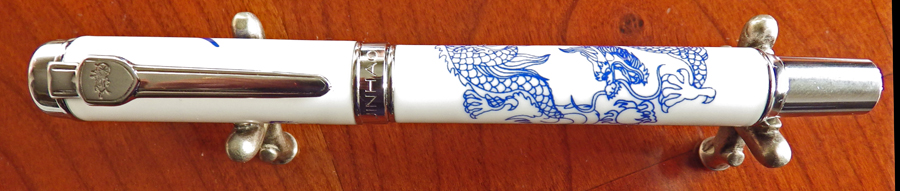
These pens are still available from various Chinese pen sales sites. If you succumb to its beauty and find yourself with a dragon pen and wish to write with it, the first thing to do is to take that miserable converter out and throw it away. It might be a good idea to stamp on the converter and smash it to smithereens in memory of the mess it made of my hands which are still faintly blue.

Chinese pens have come a long way in the dozen or so years since I bought the dragon pen. Their design is generally more ergonomically satisfying, and though some of them are still ridiculously heavy, they have lost the pernicious habit of spewing ink all over your hands.

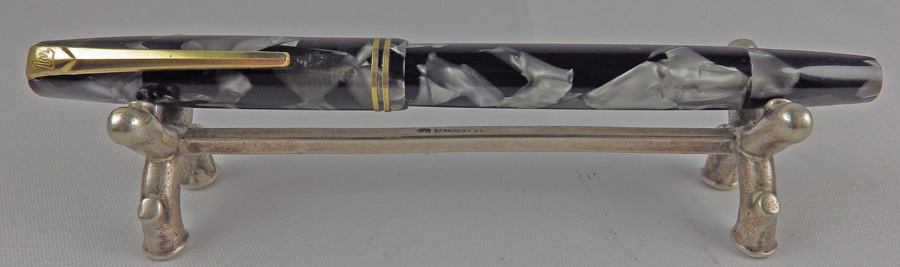
A Mysterious Blackbird

Mabie Todd flourished between the 1890s and the mid 50s, when it was taken over by Biro and began turning out ever-more poor quality pens until Biro closed the company down. That’s the story, isn’t it? Or is it?

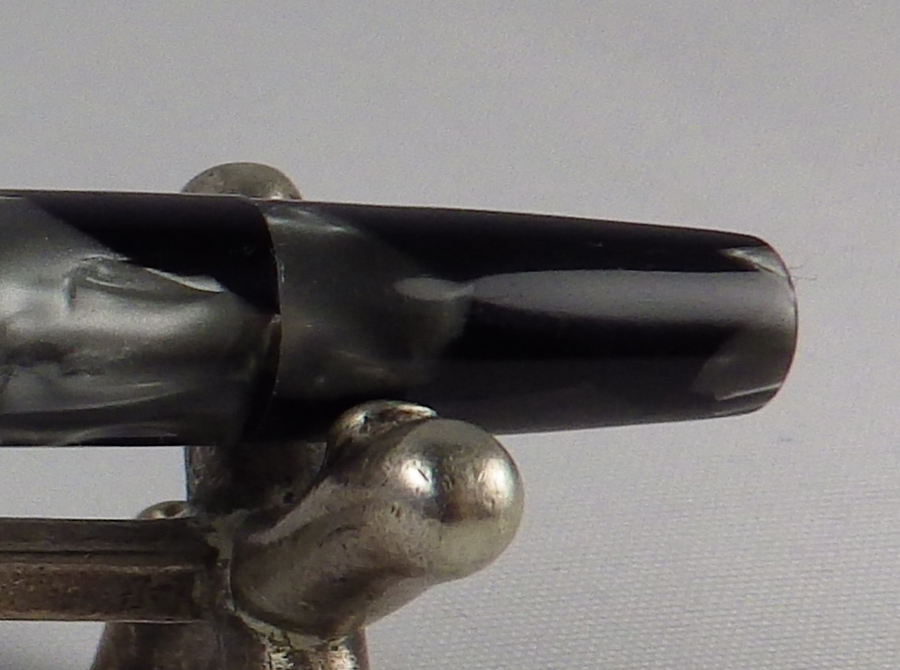
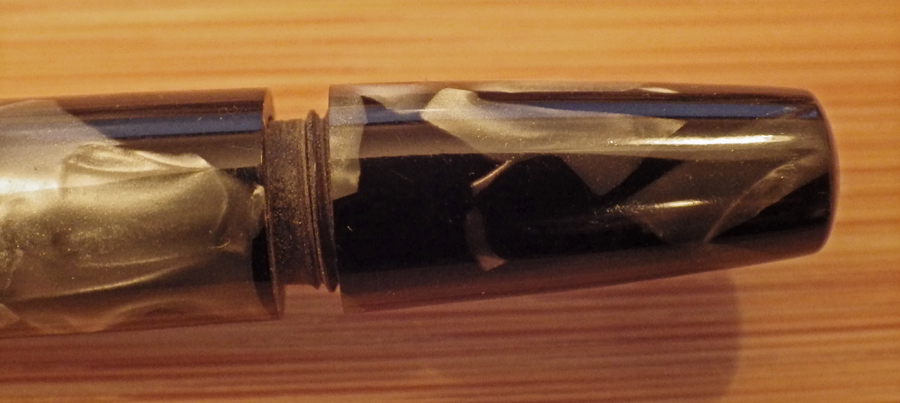
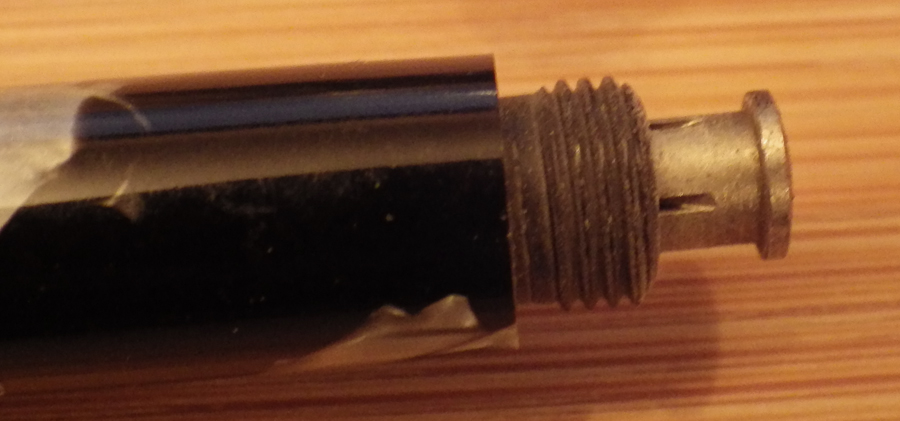
This pen turned up a few weeks ago and changed the story, for most of us at least. It’s a button filler of the traditional kind, as you would see on older Parkers or Mentmores. The quality of the workmanship is outstanding. The plastic, probably celluloid, is beautiful and the pattern continues on into the section.

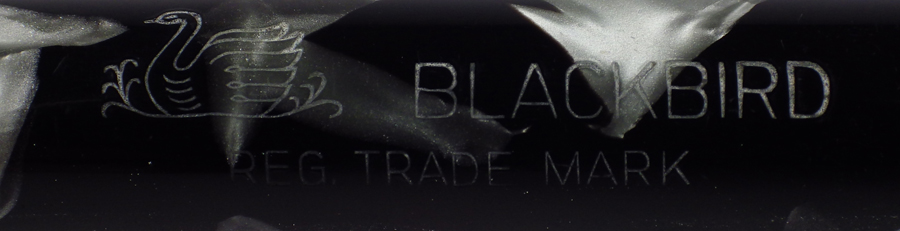
The barrel imprint identifies the pen as a Blackbird and the clip bears a Swan image.

How does it come about that such a beautiful pen is produced in about 1960, when the last pens we saw from Mabie Todd were such poor specimens? The story, so far as I know, is that this pen was made in the Netherlands. Whether it was done under licence or perhaps a company had bought out the rights to the Swan and Blackbird names and images I don’t know, but the Swan barrel imprint on the pen was made by the same stamp that was used on the mid 50s Calligraph.

Stephen Hull has other Blackbird pens, some of them button fillers like this one, others piston fillers that look as if they were made in Germany. Much mystery surrounds these pens. Perhaps when Stephen Hull’s eagerly awaited book on the English branch of Mabie Todd appears, all will be explained!


Edit to add:

Excuse the quality of the photos – done in a hurry!

IMGP4490


IMGP4493


IMGP4492

A Splendid Swan!

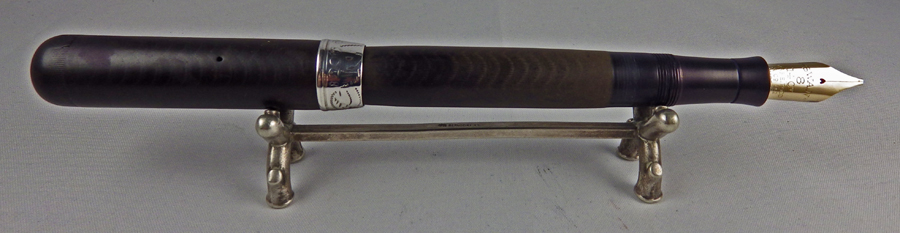
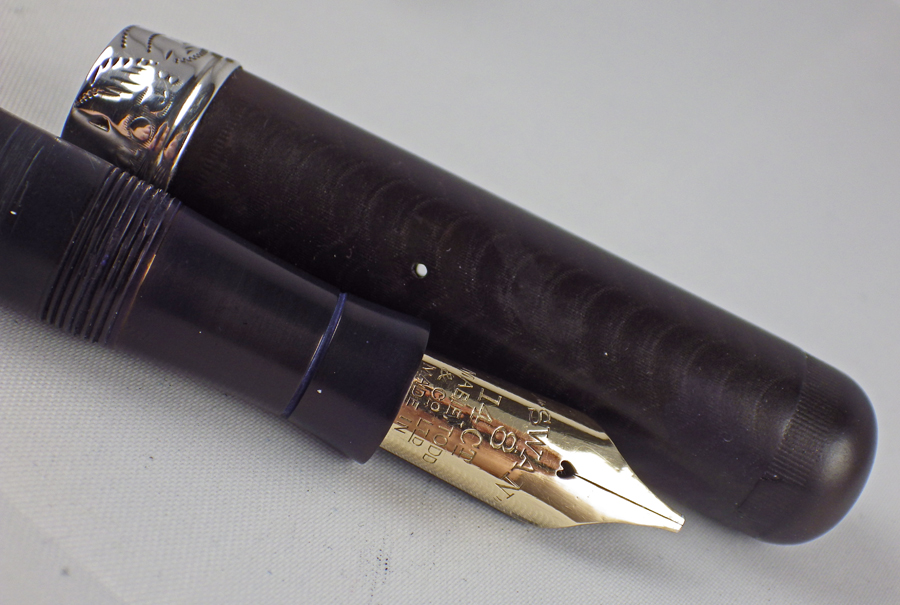
Well now, that’s a big beast of a pen!

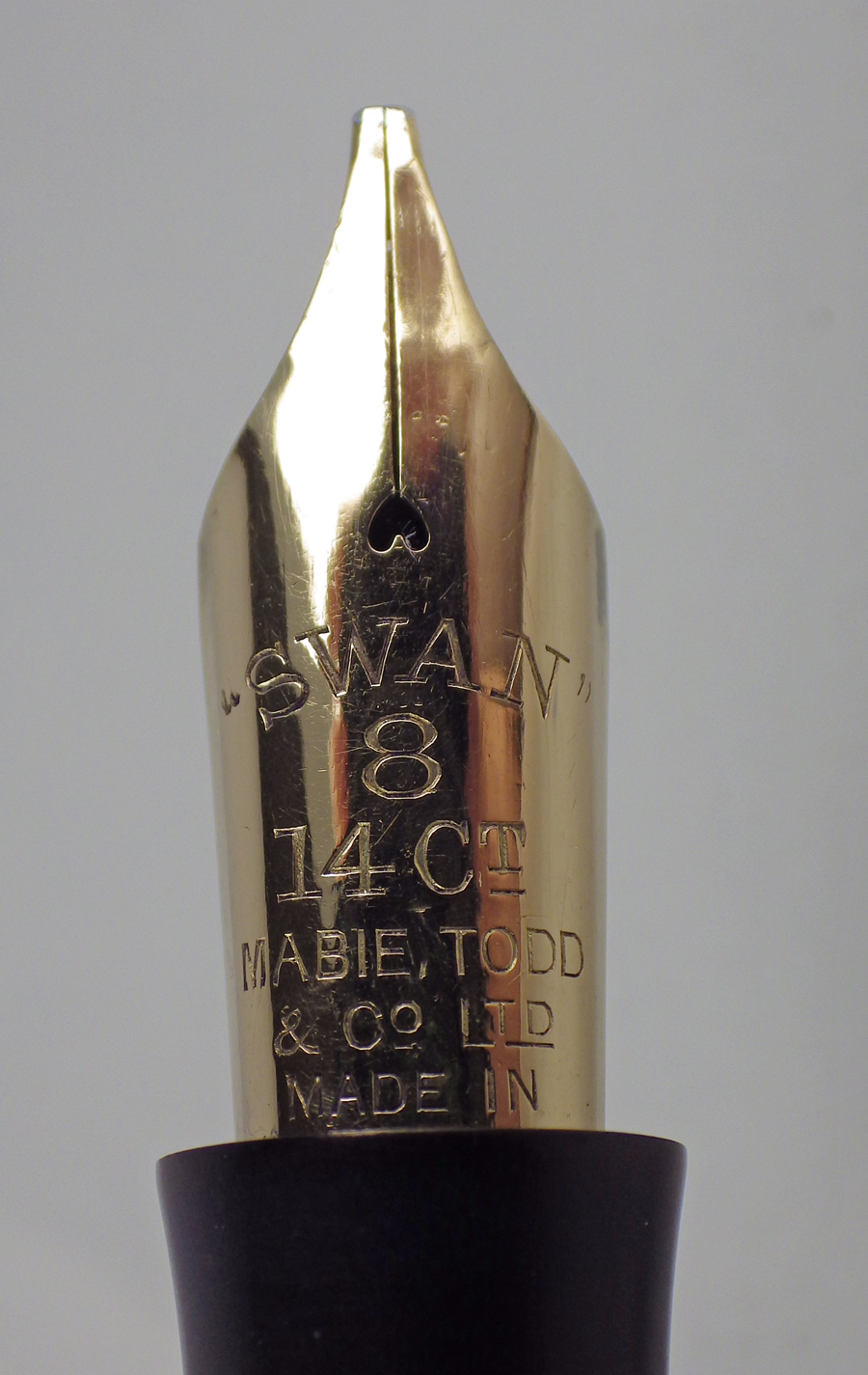
I wish it was mine but it isn’t. It belongs to a very good friend of mine and that’s the next best thing. Swans with No 8 nibs are rare – I can use that word here with certainty – and very impressive indeed. The pen’s owner calls him “Fatty” and I think that’s bang on.

This pen belonged to S T Nash of Cubley, Derby. He was an artist in wood, not especially well known but doing well enough to buy this pen, or perhaps sufficiently well-thought-of to be gifted it. He was responsible for the carving of the Rood Screen at St Andrews Church, Cubley, Derby. That’s all we know. I can find no picture of the Rood Screen.  Unfortunately the present incumbent of St Andrews Church has not replied to an inquiry. It surrounds the pen with a faint aura of mystery.

Going back to the pen itself, it measures 14.7 cm capped and is an eyedropper filler. I don’t know whether the wonderful decorated sterling silver cap band was supplied by the Swan factory or if it was added by a jeweller. Broad bands like this were often added to conceal and stabilise a crack in the hard rubber, but that isn’t the case here.

This is a very impressive pen, enhanced by the silver band and the connection with the artist S T Nash. Such things do not often appear in the lifetime of an enthusiast. I am very grateful to my friend for showing it to me and enabling me to share it with you.

My assistant says I can play with that Swan all I want, there’s a more interesting bird out here – one of the feathery, tweeting kind!

Osmiroid Calligraphy Pen

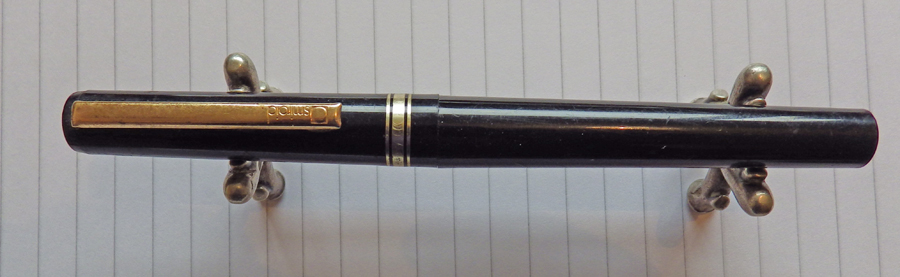
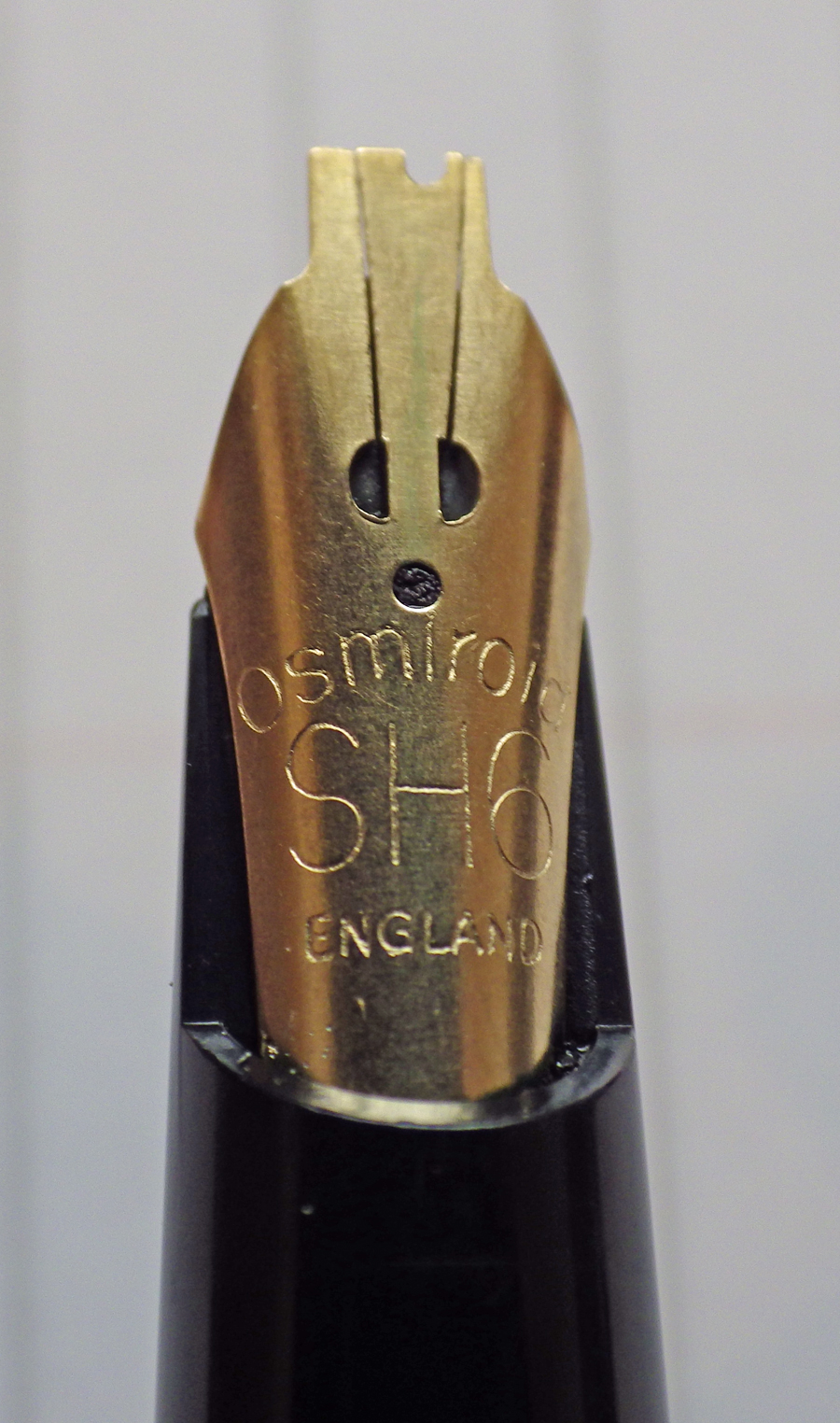
This is not a collector’s pen, or even an everyday user. It’s one of the later Osmiroids, the ones that use a different version of the interchangeable nib. This one is a squeeze-filler; the later ones use cartridges.

It’s a calligrapher’s pen. This one has a nib I haven’t seen before. It’s called a shadow italic or something like that. I don’t know what it’s for but it draws splendid lines! It makes a thick broad, italic line and a more slender line shadowing it.

In your 20s or 30s it seems like there’s all the time in the world. There was a guy in the office where I worked who was a calligrapher. To say I admired his work is an understatement; I thought it was amazing. I planned to learn calligraphy myself. I didn’t have time to do it right then, but there would be a time when I would learn to make those beautiful marks on paper.

Except that time never came. There was always something more pressing and urgent. About ten years ago I even bought a couple of books on the subject. I glanced through them. There were instructions on the formation of all the letters and examples of the fine writing I was sure I would learn one day soon.

When we moved house earlier this year, I reduced the hundreds of books we had amassed, getting rid of those we no longer needed or would never consult again. I looked at the calligraphy guides. I made a sensible decision, but not without regret. There was never going to be a time when I would sit down with those examples and devote myself to it for the years it takes to become a really good calligrapher. The books went into the pile for the charity shop. I hope that someone bought them and is practicing their penmanship right now.

Quality Control

A recurrent theme in the fountain pen discussion groups is the expensive pen that needs work before it will write properly.  Often it is something as simple as a flush with soapy water that is required but other times it is more serious work that is needed to improve the behaviour of the nib or to achieve the proper level of ink flow.  Why should that be?  Do the manufacturers of some expensive pens (no names no pack drill) believe that they are bought only to be looked at?

It has been suggested that the producers of some of those pens that fail so annoyingly have to keep costs down and one of the areas that suffers is quality control.  I can’t say whether that’s right or wrong but I would have thought that a pen that cost £300.00 or more would give at least a little profit margin.

What surprises and heartens me is how well cheap pens work – cheap pens, in my book, being pens that cost less than £30.00.  Though they’re not my cup of tea, the low-priced Lamy pens have a deservedly good reputation for working out of the box or blister pack.  Even many Chinese pens, so often criticised for not working well, are now much better than their reputation.  I have found low-cost Indian pens to be excellent and I think that experience is shared by many.

Was it like this in the old days?  Did people have to take their Parkers and Conway Stewarts back to the shop because they didn’t write well?  It seems impossible to tell, but I have a theory.

When pens are an absolutely necessary tool, as in India today or in Europe and America in times gone by, quality control would have been very important indeed.   Waterman or Onoto wouldn’t want word to get out that their new pens were faulty.  Certainly, there wasn’t the internet around for people to complain to the whole world but word of mouth could be effective, too.  It meant that manufacturers had to try harder.

Most purchasers of new and very expensive pens don’t buy them to be their sole writing instrument.  To a greater degree than ever before, other aspects of these expensive pens are as important – or even more important – than their ability to write well.  So many of those pens are offered for resale, months or years later, uninked.  The fact that they have never been inked makes for a premium price.  Perhaps it’s hardly surprising that the manufacturers don’t spend a lot of money on quality control.  The relatively rare buyer who uses his limited edition pen is often disappointed.

A Box of Old Pens

A very kind friend sent me a box of pens.   I had to go out this afternoon and I only had time to unpack them and give them a cursory glance.   I hope to be home in time to examine them all this evening.   Few things excel the pleasure of working through a batch of old pens, identifying them and deciding what’s needed to make them work again, if that’s possible.  If not, that’s rather sad, but they go into the spares bin and the day will likely come when parts from that pen will complete another.  In that way old pens never die.

When I first took an interest in old British pens, like most other people, I only wanted the very best, the Onotos, the Swans and the best of the Conway Stewarts.  I’ve become less choosy over the years.  Certainly for my sales site I would still like to present some special pens for my customers, but for myself, there are no pens I don’t really like anymore.  The pens I use in preparing this blog are often the workhorses of the pen world – Platignums or Osmiroids, or the everyday output of the large manufacturers like, for instance, the Parker 45 or the Waterman Champion.

So as I go through the batches of pens that arrive on my bench, I’m mentally separating them into several groups.  The first group is those pens that will be restored for sale.  The second group is those pens that are beyond repair and will be consigned to the spares bin.  Then there are pens that are low-value but write well.  They will probably eventually appear in the ‘Bargains’ section of my sales site but only after I have enjoyed writing with them for a while.  Finally there are pens that, generally low or no value, will go in my everyday writers box to go into such rotation as I operate.  I love making a shabby battered old Osmiroid write as it should.  That gives me as much pleasure as restoring a glowing celluloid Swan.

Osmia 223

A very generous friend made me a gift of an Osmia 223. This is the button filler version from the nineteen thirties. Many German pens are very good; some are great, the Osmia 223 being among them.

It measures 12.9 cm capped and is a typical tapered pen of its period. The blind cap fits well and is almost invisible when it’s in place.

The button filling system is well-made and the pen takes a good draught of ink, but like many great pens it’s all about the nib.

The nib is semi-flexible and a medium with no pressure applied. The tines separate with only the very slightest of pressure.


Many flexible pens require concentration to write well at speed; this little beauty does not. The gentle flexing gives noticeable line variation and does so with grace. It is truly a delight to write with. This pen will always be on my desk.