When I learned to write in the long, long ago (Methuselah was a mere child compared with me) it was first with wooden pencil, then with dip pen and finally with fountain pen. Some time later, ballpoints became allowed though I never really took to them myself.
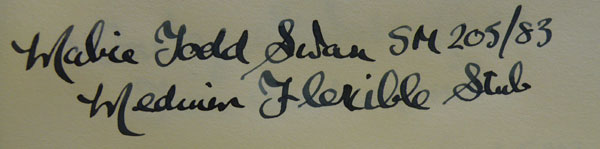
Many fountain pens, even the cheap, steel-nibbed ones that I had, will give some flexibility. Whenever I could find it I was glad of it. Nowadays, when people have generally lost the ability to write in what used to be the normal cursive style, I’m regarded as a good writer. Those many years ago when I was a kid, it was not so. Many was the stern talking-to I got from the teacher and there was the occasional clip round the ear. Trouble was, I was an imprecise writer, leaving unintended loops wherever my pen changed direction. Inducing a thicker line at those points covered up a multitude of sins, and a good thing it was too, poor writing being regarded in those days as only slightly less heinous than high treason.
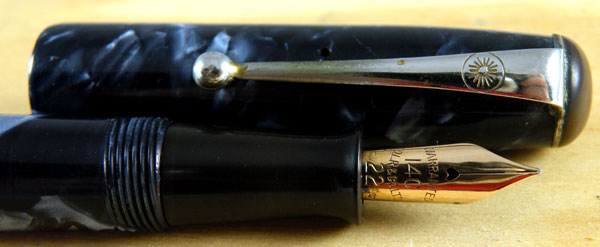
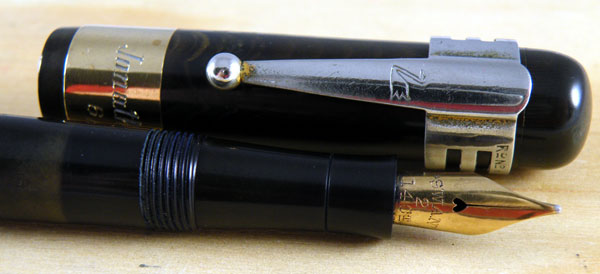
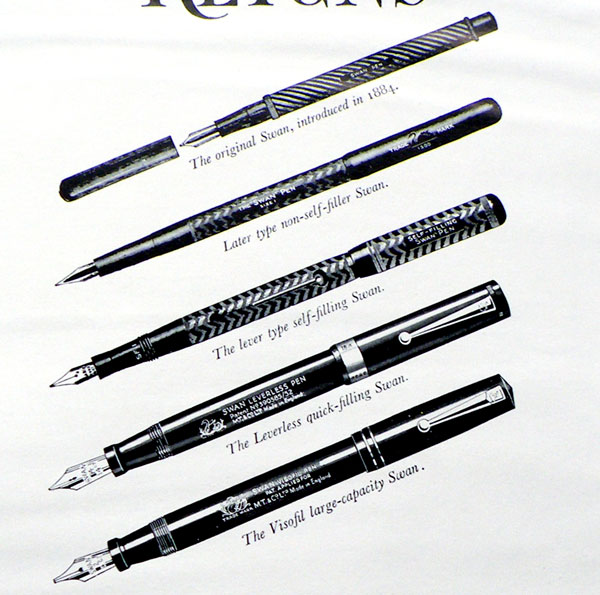
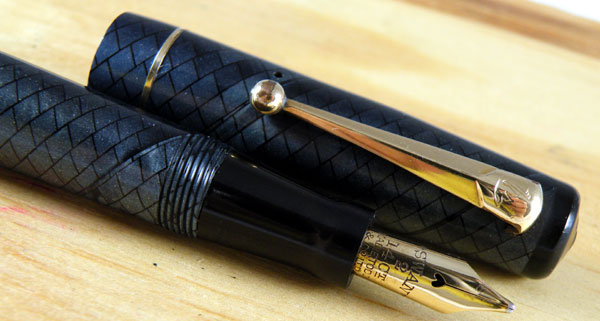
In truth, that’s what flexibility still does for me. I write as I have always written, but the variable line-width enhances my scrawl. It makes it look stylish, as if I was in control of this writing instrument which actually only obeys me when it wants. That encourages me and I make a greater effort, so that over the many years there has actually been some real improvement in my writing, on good days at least. We’re not talking an excessive amount of flexibility here; a lively semi-flex nib on the right shape of pen is all I need. Somewhere in my withered soul there is a longing to really write well with a fine-pointed, rigid nibbed pen but I suspect that will remain an unfulfilled ambition. Yes, I occasionally persevere with a Sheaffer or unforgiving Duofold for a while but it’s not a success. Soon I’m looking for my Swan Leverless or pre-war Conway Stewart.
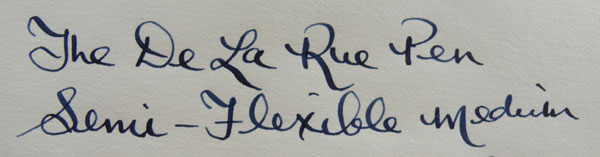
As you may imagine, oblique stubs have a similar effect on my writing and I do enjoy them, but there is a machine-like regularity to their line variation that I dislike. A pleasant compromise is the flexible oblique, a not at all uncommon nib type in British pens. As I intimated above, the deluded regard me as a good writer and over the years I’ve often been asked to produce place-cards and the like. I’m no calligrapher but I can produce a moderately attractive exaggeration of my own writing style, replete with curlicues and flourishes which seems to satisfy those who know no better. I enjoy it; though it’s laborious and more like painting than writing, it gives my very flexible pens an outing and I really enjoy deploying that elastic, paint-brush-like line.
There seems to be a wish among those who practice or aspire to real calligraphy to use fountain pens. It doesn’t work well, or at least not in the cursive styles like copperplate or Spencerian. For italic styles fountain pens may work well enough, but when serious line variation is called for, dip pens work better. They’re cheap, so little loss if a nib is broken before it was quite worn out – unlike a fountain pen nib. Dip nibs are capable of – generally – greater line variation, and the necessary pause to re-ink the pen is no disadvantage in calligraphy. The calligrapher isn’t in a hurry to cover the paper. He just wants to do it right, and the time taken is not a major concern. No call for a reservoir pen here! As a footnote, Osmiroid with their copperplate nibs and Esterbrook with their various supposedly flexible nibs encouraged calligraphers to go the way of the fountain pen, but it was a blind alley. It’s about as easy to flex a crowbar as an Osmiroid copperplate nib.
So that’s my relationship with flexibility, and an uncomplicated one it is. In my heart of hearts I love its Dionysian departure from the dry and regimented course of precisely perfect writing. Though I’m not sure that the pen is mightier than the sword – indeed I sincerely doubt it – there is something of the romance of sword-play in the well-handled varying line and the sweep of an enjoyable flourish!















 Goodwriterspens's Blog