Things got a little complicated after the surgery and my stay in hospital ended up being much longer than I had expected. I’m home to do some healing then I’ll have to go back. I won’t be updating for a while but I’ll try to deal with any queries you may have.
Uncategorized
I’ll Be Back!
There will be no new updates for a few days, but don’t worry, I haven’t lost interest in the blog. I’m going into hospital tomorrow and will have surgery on Friday. I’m not sure when they’ll let me come home or when I’ll get back to the keyboard. Shouldn’t be long, though.
Data Death
Wherever you live, you probably heard the oaths and imprecations from here today. This morning my current backup hard disk died, instantly and irrevocably. That’s two and a half years of fountain pen photos that have become unavailable to me.
It’s not a financial loss. My business files are fine, because I back them up to CD as well. The photos have no real earning potential for me. Mostly, I use them for this blog and as illustrations to questions I answer in the pen groups. It would cost £280.00 to recover the data, and it just isn’t worth it. I would have no return on that outlay.
Those photographs were a wonderful reference, though, and I’m really going to miss them.
It does make me consider my backup policy, which I felt was a sensible one, but it clearly wasn’t enough because it has let me down. Realistically, how many backups of backups of backups do you need before you can say your data is safe?
Comments
I reply to all comments. However, WordPress runs a spamtrap called Akismet which deletes everything it determines to be spam. I don’t get to see those things it deletes, so it does concern me that there might be false positives. If you leave a comment and don’t get a reply, contact me by the email address in the sidebar. It’s munged to fool address-collecting bots, but just substitute @ for (AT) and it’ll work.
The Staff
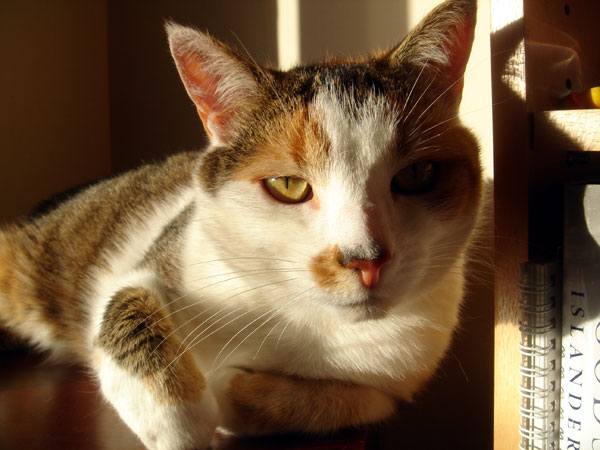
This is my assistant, Smartpants. Miss Pants mostly looks after the paperwork. She’ll chase a crumpled up tax form for about quarter of an hour. Additionally, she helps by poking pen parts behind things so that I can’t find them.
Good help is hard to find these days so I’ll just have to persevere with Smartpants.
A Word of Caution
Those of you who have a WordPress blog will be aware that digging through the statistical information in the Dashboard page can throw up all sorts of interesting information. I was poking around there earlier tonight and I came upon a referrer. I traced it back and with a little sleuthing found that an entry of mine had been quoted in an eBay auction, essentially to authenticate that what the seller said about his/her pen was true.
I put information up here for public use. However, I do wish to strike a note of caution. When I began this blog, I said that I was no expert on the history of pens. I might get it wrong. I try not to, but better people than me make mistakes, even in the standard works on fountain pens.
So what I’m saying is this: if you sell someone a pen that you have “authenticated” by reference to this blog, and the buyer gets a little fractious about it because it’s something other than what you said it was, you’re on your own. I don’t give permission for my blog entries to be directly quoted or referred to to support sales.
For non-commercial purposes, I’ll be perfectly happy for anyone to refer to the blog or quote from it, provided it’s credited. After all, the information I put up here is for sharing within the hobby. I just feel that, given what has happened, I need to cover my back a little. I like my house and I really want to keep it…
Back To Work!
I took a break from pen repair and pen sales for about six weeks. Sales tend to fall away a bit in the spring, for some reason, so it’s a good opportunity for me to get the garden in good shape after the ravages of the winter. It meant that I could spend a bit more time on this blog too, so the frequency of posts has been a bit higher of late. Also, I needed to build up stock again, which I have done. I have a pile of pens to repair. I’m itching to get at them, so I expect I’ll be posting a little less, but who knows what interesting things may turn up among my pile of pens!
Fountain Pen Forums
When you think about it, online fountain pen forums are a surprising phenomenon. There aren’t all that many fountain pen fanciers in the world, and yet the subject has a considerable internet presence, a real tribute to the enthusiasm of fountain pen people.
Perhaps the oldest web forum still existing is Pentrace. Great pens, superb photography and a family atmosphere. Like most families, they have the odd entertainingly heated squabble. There’s sound scholarship here, but it’s worn lightly.
The Big Dog among pen forums is, of course, The Fountain Pen Network. It’s broad in scope in every sense – some very knowledgeable people, lots of novices and every stage in between. All types of fountain pen are discussed, though nowadays the balance has swung towards new pens. The standard of discourse is, shall we say, varied! If you ask for pen repair advice there, wait until a few have answered. Some of the first rapid-fire responses could be disastrous if acted upon, but sooner or later one of the more experienced people will give better advice. FPN is a tolerant, easy-going place. Yes, you can get kicked out, but you really have to work at it!
Several of the other pen forums arose as a result of disagreements or dissatisfaction with FPN. Lion & Pen was, I think, the first, beginning in 2005 if I remember aright. Intended as a scholarly forum, mostly on older pens, it more than fulfilled its potential for a few years, then was allowed, deliberately I fear, to wither on the vine. It has seen little activity in the last few years but I believe there are plans to resurrect it in the near future. I hope they are successful. The archive there is invaluable.
The Fountain Pen Board is almost a re-run of Lion & Pen, though with (mostly) different personalities. Like L&P, its major failing is that it is somewhat narrowly American, but given the wealth of knowledge there it has great potential. Early days yet.
The Fountain Pen Community is the project of another exile from FPN. It flourished briefly, but having no special direction of its own has gradually died away. There are very few posts there now.
The most recent forum is Fountain Pen Geeks, who assure us that they’re cool! Again, there seems little to differentiate this group from others, and the frequency of posts is not high. It hasn’t been around long, though, and may yet develop a new direction that will attract active membership.
Pen forums are, I believe, an invaluable resource. They can be a repository of knowledge and wisdom about pens. The fact that they’re on the web gives them immediacy, and those that archive posts (not all do) remain an excellent resource. I would much rather see the information made freely available in this way rather than squirrelled away in some expensive, glossy magazine. The pens cost money but the information should be free, I believe.
FPN hardly needs my good wishes – it goes from strength to strength. I would like to see the other forums – and many more – flourish too. There’s more than one approach to the study of the fountain pen, and the wider the discussion the more we all benefit.
Pentrace: http://www.pentrace.net/mboard.htm
Fountain Pen Network: http://www.fountainpennetwork.com/forum/
Lion & Pen: http://kamakurapens.invisionzone.com/
Fountain Pen Community: http://thefountainpencommunity.activeboard.com/
Fountain Pen Geeks: http://fpgeeks.com/forum/forum.php
The Section
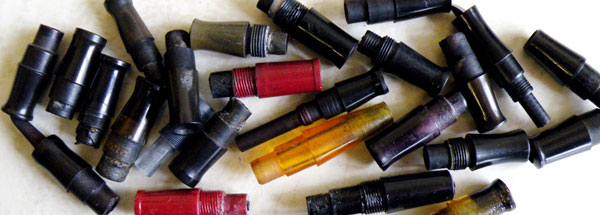
The section, at its simplest, is a tube that holds the nib and feed and contains the flow of ink from the reservoir to the point. It was originally known as the gripping section, not because that’s where we grip the pen (not everyone holds it so far down) but because it gripped the nib and held it in place. All but the occasional pedant calls it just “the section” now.
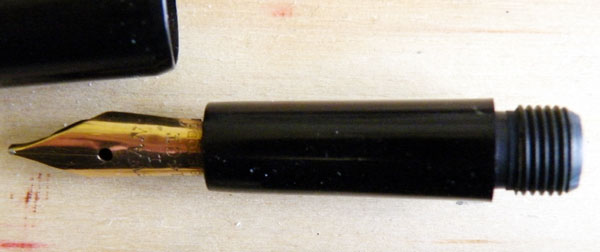
The first sections were tapered to accommodate a slip cap, and had a screw fitting to enable access for filling the eyedropper pen, and to seal it against leaks when closed. They were invariably hard rubber, which machines well, and the threads on traditional eyedropper pens are usually extremely well cut and remain ink-tight today. Some people apply silicone grease as a sealant but it’s seldom necessary. It will do no harm and may make unscrewing the section easier, but additional sealant is rarely needed. These early, tapering sections are often quite thin-walled, and it pays to treat them with care. Some, like the early Swans, will have slits in the section to accept the nib.
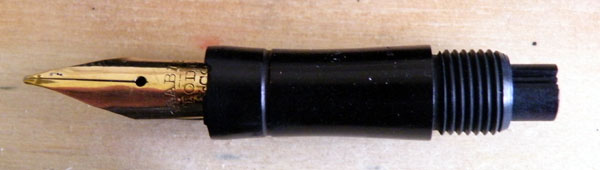
Swan was early in the field with a screw cap, and the section had to change to meet its needs. It’s still an eyedropper filler, so it, too, has the screw fitting to the barrel, but now the end nearest the nib swells out to provide a flat face, which makes a positive seal against the inner cap.
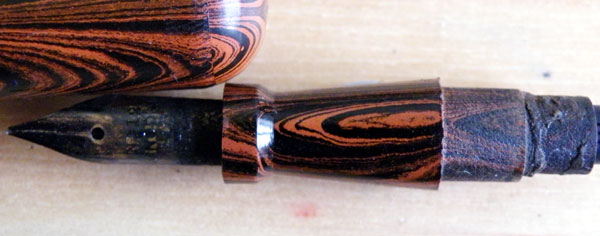
The next development changes the section to attach to a sac by a peg or nipple at the rear of the section. The “step” at the front of the section to meet the inner cap has become more accentuated. This form of section will remain unchanged for several decades. The nipple is the most fragile part of the section, and cleaning it of the remains of an old sac should be done carefully. If you should be unlucky enough to break the nipple on a rare section for which you can obtain no replacement, do not despair. They can be repaired, though it isn’t a job for the novice. Professional restorers can do it for you.
Even after hard rubber was superseded by celluloid for barrels and caps, most sections were still made from hard rubber. There were several reasons for this: it machined well, and sections have to be made to a fine tolerance. It is less brittle than celluloid and has some “give”, a necessary attribute, given the fact that a section is always containing the pressure of a nib and feed which are essentially wedged in place. Hard rubber sections contain that pressure well, but they do distort over time, ovalling slightly where the edges of the nib meet the section. For this reason, it’s a good idea, before removing the feed and section, to mark with a pencil where the centre-line of the nib is. Replacing the nib in exactly the same place will be much easier.
Sections come in for quite a bit of abuse. They are often quite difficult to remove from the barrel, and undue force may be applied with inappropriate tools. That’s a recipe for disaster, of course, and heat is your friend in removing sections from barrels. That, and a lot of patience. If you must use pliers, use ones with rubber on the jaws. Don’t use excessive force; it will free up after repeated applications of heat and moderate force. Never remove the nib and feed while trying to remove the section. Leave them in there, as they provide internal support for the section and prevent it from being crushed or cracked.
Some sections have a press (friction) fitting, some are screw-in. You’d think there would be some some kind of logic to which type was used for which purpose, but it isn’t so. Certainly, ink-in-the-barrel pens like eyedropper fillers and Onoto plunger fillers invariably have screw-in sections to contain the ink. Logically, button-fillers should have screw-in sections because they have to resist downward force from the pressure bar, and lever-fill pens should be friction fit as they don’t have any pressure to deal with. Would that it were so simple! Many button fillers are friction fit. It’s the cheaper fitting method, and, in truth, the force a button-filler’s section has to contend with is not that great. Then there are pens like the Parker Televisor that use the Parker anchor pressure bar which transfers the force to the barrel end, rather than down to the section. They have friction fit sections.
Surely, though, there’s no need for a lever filler to have a screw-in section? That’s right. There’s no real reason for it, but they do. Many Swans and Wyverns have screw-in sections, perhaps because they were seen to be an indication of quality, perhaps to reduce the number of different parts that were being manufactured. Just to make it even more difficult, some Wyverns have a left hand thread! You never know what to expect when trying to remove the section from an unfamiliar pen, so proceed with caution.
When pens like the tubular-nibbed Sheaffers and the Parker 51 came along, the design and even to some extent the purpose of the section began to change, as did the nomenclature, as that area of the pen became the “shell” or the “hood”. There were other changes, too, to accommodate the plastic cartridge, but all these interesting developments fall outside this discussion of the section.
Levers
Once I’ve done the basic restoration on a pen, it’s time for write-testing, and if it’s a lever filler it’s at that point that I start getting especially acquainted with the lever. I fill the pen, I empty out the ink, then flush the pen. That’s a lot of levering, and it’s fair to say that not all levers are created equal. There are good ‘uns and bad ‘uns, and the worst are those specially designed to stab you wickedly under the thumb-nail if you give them the chance. Wyverns are a little dangerous in this respect. There’s the arrow-end lever:
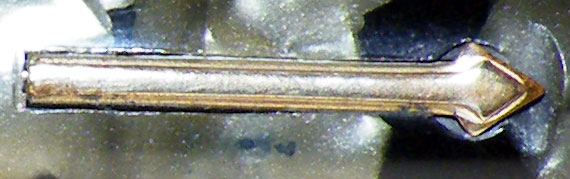
and the straight lever with a flattened end:
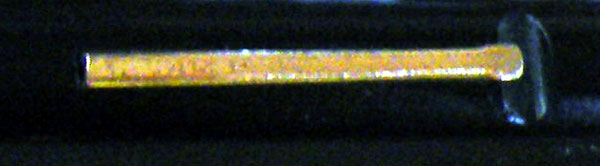
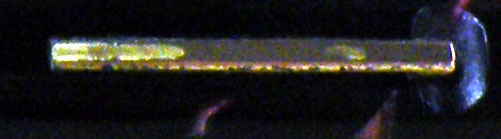
Both are pretty stabby! So too is the straight Summit lever:
Swan levers come in short and long forms, but are otherwise quite ordinary, being a straight lever with a rounded end:
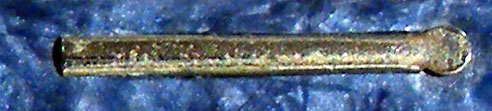
In the nineteen thirties, they also used black hard rubber levers, which worked well and look pretty good:
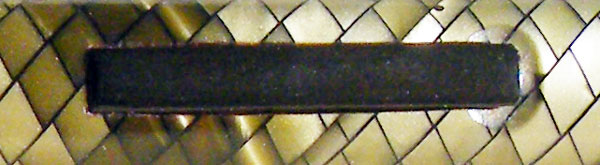
The Waterman box lever is undoubtedly a thing of beauty:

and it was emulated by some British manufacturers, including Conway Stewart and De La Rue. The earlier ones are fragile, though, and can fracture in the middle. They can be repaired, if you don’t need the pen to appear perfect, or replaced, but you have to be careful to get the exact replacement. There are several sizes and they don’t all pivot in quite the same place. Waterman later went for a straight lever with a flattened end, a bit like one of the Wyvern versions, but not so lethally sharp!

Conway Stewart always made a feature of their levers, and over the years they remain variations on the lollipop-shaped theme, with varying ways of displaying the company initials:
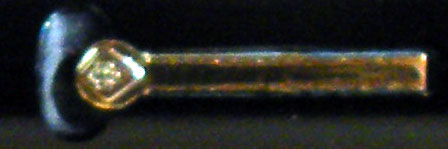
Conway Stewart levers have a deserved reputation for fragility. Handle with care!
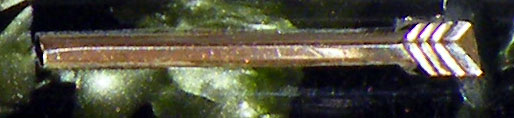
Finally (in this far-from-comprehensive round-up), the Dickinson Croxley had an exceptionally decorative lever in the form of the flight of an arrow, and it echoed the design of the clip:
 Goodwriterspens's Blog