The Wyvern No 33 Clip Filler

Like the matchstick filler which it so closely resembles, the clip filler was temporarily accepted as a solution to the problem of getting ink into the pen, not because it was so technically elegant, but because the better methods were covered by patents that hadn’t been hacked yet.

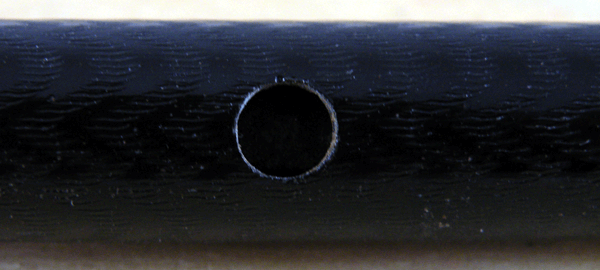
I wrote about a clip filler before, back here: http://wp.me/p17T6K-kn and I had assumed that like this Aiken Lambert, all clip fillers were American. It turns out not to be so. Wyvern had their own clip filler.

By the late teens of the twentieth century, Wyvern was experimenting with self-filling pens. There was a matchstick filler of 1918 and it seems likely that this pen followed very soon after. It’s a slight improvement in convenience; you might not have a match handy but you’ll always have the cap at hand.

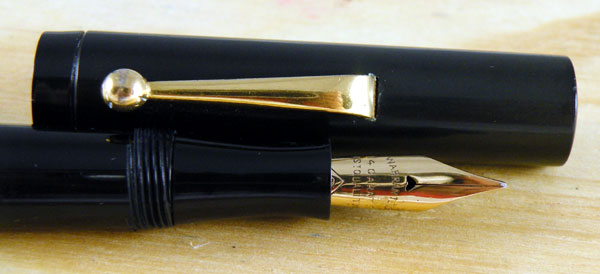
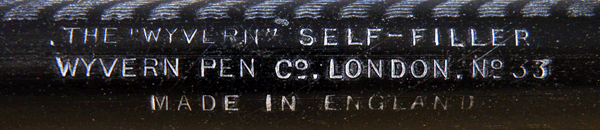
It’s a well-made pen of a very traditional appearance, straight-sided except for a gentle taper at the barrel end. This example looks like it has never been used. The black of the black hard rubber isn’t at all faded and the chasing is sharp, as is the barrel imprint.
Actually, though I suggest above that the filling system isn’t elegant, there’s something to be said for minimalist simplicity. When it comes down to it, there’s no real need for a lever, crescent or hump if you can apply pressure directly to the pressure bar! It works unfailingly because there’s so little that can go wrong.
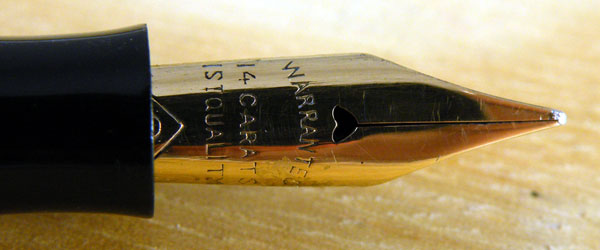
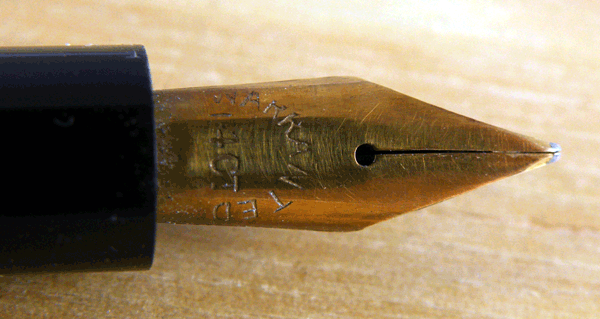
The nib is warranted and is likely to be original. Wyvern bought in nibs until the mid-twenties when they established their own nib plant. The nib has a modicum of flexibility.
All in all, this is an interesting, historical and practical pen. It’s an intriguing stage along the trail to the modern fountain pen.


My thanks to Shrikaanth Krishnamurthy for allowing me to see and photograph his beautiful pen.

The Mentmore Spot

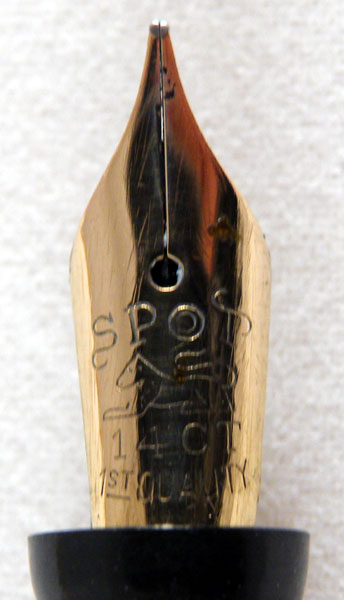
When Mentmore started out one of their earliest pens was the Spot. The first version was a handsome flat-top mottled hard rubber pen and it was issued in 1923. It caught on quite well – it was a lot of pen for comparatively little money – and Spot became established almost as a separate brand in its own right. It was strongly marketed with the slogan “None genuine without the spot.” Spot pencils and ink were produced also.

This one’s a later version, still hard rubber (quite faded in this case) but now streamlined and quite modern-looking. I can’t accurately date this pen but I’d guess at the late thirties. It has the leopard logo on both the nib and the barrel, and the cap band has the “stack of coins” form. It’s a solid, well-made pen, though this example has seen a lot of use.

Spot has a collector following and early examples are snapped up pretty quickly. It has been said – and appears to be true – that Spot used the white dot before Sheaffer used the same thing to indicate a lifetime warranty.

The Desbeau Advertising Pens

I frequently buy lots of pens in eBay. Quite often, it isn’t all that apparent what’s in the lot, but if it doesn’t go too high I’ll always take a chance. Apart from anything else, poor pictures and bad descriptions scare other bidders off, so if there’s anything decent in the lot, you score.

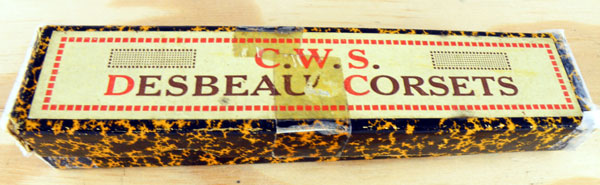
Among the other pens in this lot was this strange box.

And in it were two glorious pens, a mottled hard rubber lever filler from the twenties, which looks like it has never been used, and a later, maybe forties, button filler in striking green/black marbled celluloid. Score? Well, maybe…

Now I may be wrong, but I don’t think my customers will be beating a path to my door to lay claim to pens that bear the legend “Desbeau Corsets”. If I’m proved to be wrong I’ll happily sell them, but if not I’ll equally happily keep them as users. They’re gorgeous pens.

Of course my curiosity was piqued and I went a-googlin’ to see what I could find. CWS, as the Brits among us will recognise, is the Cooperative Workers Society. DesBeau Corsets were popular support garments made at the factory in Desborough from about 1920 to 1970. They were well marketed; as well as the pens, there were advertising pocket mirrors, fruit knives and thimbles.

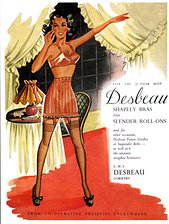
And there were adverts, like this one:

Does this imply that sex existed back in the nineteen-thirties?

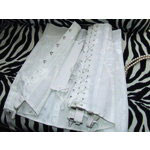
And finally, here’s the dread garment itself:

The famous Desbeau Corset!

The Paragon

This one’s a total mystery to me and if anyone knows anything about it, I’d be delighted if you would chime in. It’s the Paragon and that’s all I know with certainty. Stylistically, I’d say it was made in the nineteen-twenties. It’s the typical flat-top of that period though at 13.8cm capped it’s larger than most.

It has a large and elegant warranted 14ct nib and the lever bears a four-leaf-clover symbol. I believe these were parts that could be bought in. The clip is inserted through the celluloid of the cap and retained by an inner cap. The barrel imprint is the single word “Paragon”. Not another hint as to who made it or where, though there’s every reason to believe that it’s English.

This isn’t one of those cheap pens that were turned out in their hundreds as advertising give-aways or sold for a few shillings. This is a pen with a solid feel, well made, robust and quite impressive in its size.

Info, anyone?

New Additions

I’ve had a busy morning loading pens onto the website. Swans, Parkers, Watermans, a Paragon and a Summit, an Onoto and a De La Rue and a couple of new additions to the Bargain Corner too. Plus some USA Swan bling!

Broad Oblique Blackbird BB2/60

It’s no good clamouring and begging. This one’s already sold!

A few days ago, someone asked me for a Swan with a broad oblique nib. I didn’t have one. It’s hardly surprising – they’re rarer than hen’s teeth. I see a few obliques in the course of a year, but broad obliques? Once in a blue moon.

The very next day, among a delivery of pens I’d bought was this BlackBird BB2/60, a very common pen, but with a very uncommon nib – a broad oblique! I’m not a superstitious sort, but the implausibility of that juxtaposition of occurrences did make me wonder if there’s an unusual conjunction or alignment of the planets around now…

Anyway, I was able to get back to the gentleman and tell him that while I didn’t have a Swan with a broad oblique nib, I did have a Blackbird that is both seriously broad and fully oblique. He’s happy and so am I!

The WHS Self-Filler


Every now and again you come across a beauty that makes you draw your breath in sharply! This WHS pen, more than a century old and in superb condition is one such. These pens were supplied by Conway Stewart to various customers as an own-brand pen, but it is best known and most often seen as the W.H. Smith Self-Filling Pen. Conway Stewart didn’t actually make them, back in 1906, but bought them in from George Shand, a company later bought up by Jewel – such are the complications of the pen industry!

The pen is a simple syringe filler, perhaps not the best filling system ever devised, but welcome as a self-filler at a time when most pens were filled with an eyedropper. They appear with both generic warranted nibs and WHS nibs.

Just quite why or how this example survived in such perfect condition I can’t guess, but it’s as black as black can be and the patterning on the barrel is crisp and clear. Quite a wonderful accident of preservation.